How To Print On Cork Coasters For Professional Diy And Custom Designs
Printing on cork looks simple until your design lifts at the edge or the ink soaks in unevenly. Cork is its own material, so the method that works on a mug will not always work here. Our guide covers how to print on cork coasters with HTV, sublimation, DTF, paint, and more, so you pick the right method the first time.
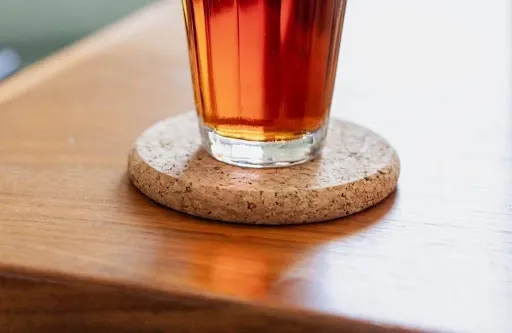
Key Takeaways
- HTV and a heat press are the most beginner-friendly way to print on cork, giving crisp, durable designs with simple tools.
- Cork resists water, and heat transfer, so painted and printed work usually needs a sealing or testing step before it lasts.
- Match the method to the job - hand painting for one-off gifts, sublimation or DTF and UV for full-color batches and resale.
- We supply high-quality custom cork coasters in various styles and print methods, so you can personalize with names, dates, logos, and artwork on a budget.
Table of contents
-
How To Print On Cork Coasters?
-
How To Make Designs On Cork Coasters That Stand Out?
-
Can You Heat Press On Cork Coasters Successfully?
-
Can You Sublimate Onto Cork For A Professional Finish?
-
What Professional Printing Methods Work Best For Cork Coasters?
-
Which Cork Coaster Printing Method Produces The Best Professional Results?
-
How Do You Make Your Own Diy Cork Coasters At Home?
-
How Do You Hand Paint And Seal Cork Coasters For Custom Artwork?
-
Can Mod Podge Really Transfer Photos Onto Cork?
-
How Can You Engrave Stone & Cork Coasters For Premium Results?
How To Print On Cork Coasters?
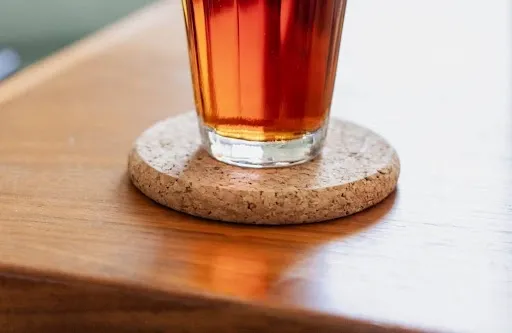
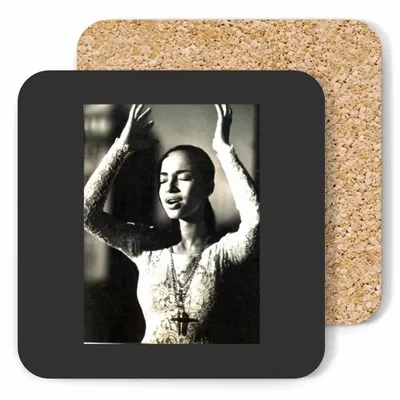
You can print on cork coasters at home with heat transfer vinyl (HTV) and an iron or heat press, by hand painting, or with a direct-to-film (DTF) printer. For a clean, repeatable finish, HTV pressed onto cork is the most popular and beginner-friendly route.
Here is the full beginner HTV method, start to finish:
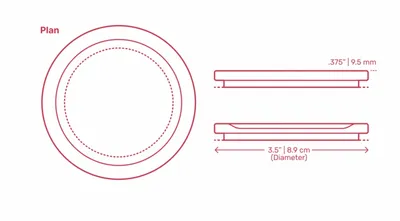
- Create and size your design in Cricut Design Space or Silhouette Studio to about 3.5 inches for a standard coaster face.
- Mirror the design, especially any text.
- Load HTV shiny (carrier) side down and cut on the iron-on/HTV setting, test-cutting a small shape first.
- Weed away the excess vinyl, leaving only your design on the carrier sheet.
- Wipe the cork clean, then position the weeded design carrier side up.
- Cover with parchment or a Teflon sheet and press with firm pressure at the HTV's stated heat range for 10 to 15 seconds.
- Let it cool, then slowly peel off the carrier sheet.
- Seal the finished coaster with waterproof varnish or Mod Podge for daily-use durability.
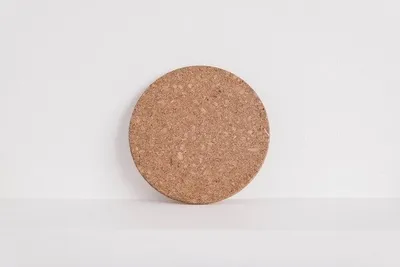
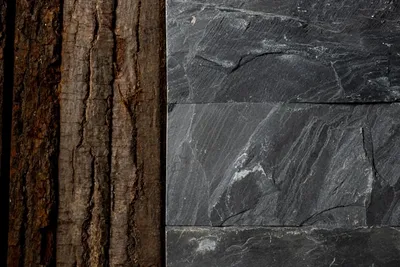
Cork is a natural bark material with a textured, porous surface, so surface prep matters - a quick wipe to clear dust and grit before any heat or paint prevents most lifting later.
The main methods sort by project type:
| Project | Best Method | Why |
|---|---|---|
| One-off gift | Hand paint or Mod Podge | Personal, low-cost |
| Crisp DIY text | HTV | Clean edges, simple tools |
| Photo design | Sublimation on coated cork | Smooth full color |
| Raw cork color | DTF or UV | Better detail without coating |
| Branding or resale | UV, DTF, or bulk printing | Consistent and scalable |
If a press feels like too much for one project, you can work with us on custom coaster printings and skip the equipment entirely.
How To Make Designs On Cork Coasters That Stand Out?
Strong cork coaster designs start with the look you want and the resolution to match it - custom artwork turns a plain blank into a gift, a branded giveaway, or decor worth displaying.
Pick a style before you open any software:
- Minimalist: one name, monogram, or line icon with plenty of bare cork showing.
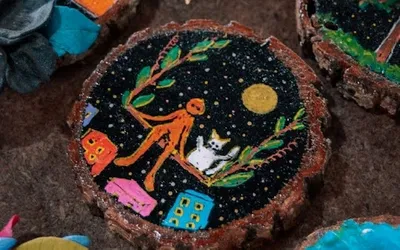
- Rustic: earthy tones and hand-lettered text that suit cork's natural grain.
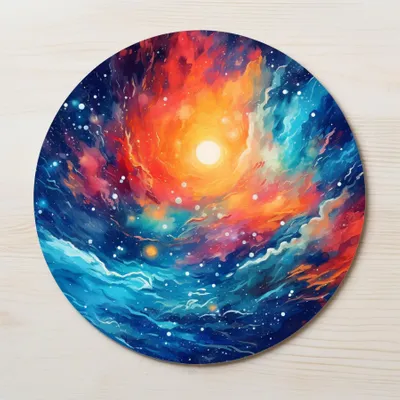
- Colorful: full-photo or bold graphic prints, best left to sublimation, DTF, or UV.
We lay out in Cricut Design Space, Silhouette Studio, or Canva, then export clean files. For any printed or photo design, build the file at 300 DPI at final size - the recommended resolution for printing - since lower resolution prints are fuzzy.
Sizing the art to a 3.5 to 4 inch coaster face keeps detail sharp, since a design stretched past the blank loses crispness fast.
How Do You Transfer Images, Logos And Photos Onto Cork Coasters?
You transfer images to cork three common ways: Mod Podge photo transfer, heat transfer with HTV or DTF, and printable vinyl you cut and stick. Each moves a printed image onto the cork face, but the prep differs.
Prepare the image first: mirror any text and print at high resolution so fine lines hold.
- Mod Podge: print on plain or laser paper, glue face-down, then rub the paper away once dry.
- Heat transfer: weed the design, then press with heat and firm pressure.
- Printable vinyl: print, cut, and apply like a sticker.
We give glue transfers a full drying window, often a few hours, before peeling, since rushing the peel is the main cause of blurry or faded transfers.
Looking to print custom designs on cork coasters?
Work with us to create custom cork coasters in bulk with your logo, names, or artwork printed cleanly, ready for gifts, branding, or your next event.
Can You Heat Press On Cork Coasters Successfully?
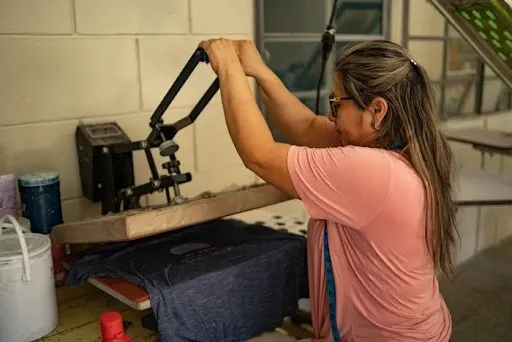
Yes, heat pressing works well on cork and is a reliable way to customize it. Cork tolerates the short, controlled heat an HTV press uses, so crafters reach for it first.
HTV carries a heat-activated adhesive that, when heat and pressure are applied, softens, grips the surface, then sets as it cools. Most HTV presses in the 280 to 320°F (138 to 160°C) range with firm pressure for 10 to 15 seconds, though settings vary by brand.
We always test settings on a scrap blank first. Cork is a good insulator and scorches if heat runs too long, so a Teflon or parchment sheet protects the surface, and we start at the low end of the time range.
How Do You Design And Cut HTV For Cork Coasters?
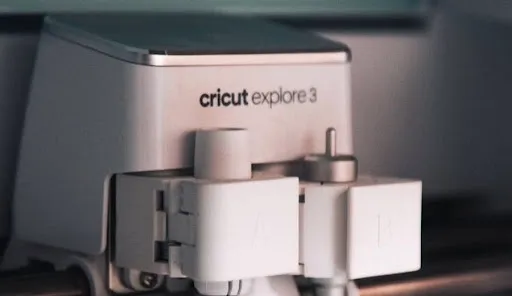
Design HTV in Cricut Design Space or Silhouette Studio, size it to the coaster, and mirror the image before cutting. Mirroring matters because HTV is cut on the back and flipped when applied, so text comes out backward if you skip it.
Use the machine's iron-on or HTV setting and test-cut a small shape first. We slow the blade for thin vinyl and check corners before weeding the full sheet.
Can You Sublimate Onto Cork For A Professional Finish?
Sublimation gives a smooth, full-color finish, but it needs a polymer-coated surface, so raw cork is a poor match. The ink turns to gas under heat and bonds with polyester and polymer coatings, not bare natural fibers.
On coated cork or hardboard coasters with a cork backing, sublimation produces vivid, no-feel prints. On raw cork, the dye has little to grab, so color looks dull.
Choose sublimation over HTV when you want:
- Full-photo images with smooth gradients.
- A flush finish with no raised vinyl edge.
- Repeatable color across a larger batch.
For raw cork in bright color, HTV, DTF, or UV are safer picks. For the flush photo look without a printer, our custom photo coasters handle the print for you.
How Does Direct-To-Film Printing Work On Cork Coasters?
DTF prints your design onto a special film, coats the wet ink with adhesive powder, melts it, then heat-presses the film onto the cork. The film carries the print, so unlike sublimation it does not need a coated surface.
DTF shines for detailed, full-color artwork because it lays a flexible ink layer that holds fine lines and gradients. Pressed and cured properly, the result is durable and water resistant, good for coasters that see real drinks.
DTF beats sublimation on raw cork and beats HTV on multi-color detail, since you skip layering separate vinyl colors. We reach for it when a logo has many colors or a photo-style look.
Want any design printed onto your chosen coaster material?
With our custom coaster printings, you upload the artwork and we print it onto the material you pick, so the finish matches the look you want.
Learn moreWhat Professional Printing Methods Work Best For Cork Coasters?
For professional and commercial runs, UV printing, sublimation, DTF, and DigitalHeat FX lead the field. UV printing cures ink with light and prints on many rigid/uncoated substrates, but cork texture can affect detail and adhesion, so cork's grain is not a barrier.
Here is how they compare for scaling up:
| Method | Best for | Surface need | Scalability |
|---|---|---|---|
| UV printing | Texture, full color | Works on raw cork | High |
| Sublimation | Photos, smooth color | Needs coating | Medium-high |
| DTF | Detailed multi-color | many surfaces, but test adhesion on cork | High |
| DigitalHeat FX | Versatile transfers | Any surface | High |
UV and DTF scale best for mixed designs because you can print every coaster differently in one run, while sublimation stays efficient for coated blanks. We point bulk buyers to whichever method fits the surface and budget, and can run custom cork coasters in bulk so you skip the equipment cost.
Which Cork Coaster Printing Method Produces The Best Professional Results?
The strongest professional results come from matching the method to the design and order size, not one universal winner. Cost, finish, and speed each pull in different directions, so the right call depends on the job.
Weigh it like this:
- Lowest cost per piece: HTV for simple one-color work; UV or DTF for color at volume.
- Sharpest finish: sublimation on coated cork for photos; UV for raw-cork color.
- Fastest at scale: UV and DTF, since each coaster can carry a different name or design.
For bulk orders, per-piece price drops as quantity rises, and consistent reorders matter more than the cheapest single run. Bars and restaurants usually want logo coasters at volume, so we steer them to custom logo coasters with bulk discounts and a free proof.
Need a logo printed on coasters for your bar or brand?
Use our custom logo coasters to put your mark on every drink, a budget-friendly branding move that bars, restaurants, and trade shows reorder often.
How Do You Make Your Own Diy Cork Coasters At Home?
You make DIY cork coasters by cutting or buying cork blanks, adding a design with paint, vinyl, or transfer, then sealing the surface so it survives real use. The materials are cheap and the results feel personal.
Names, dates, and small logos turn a stack of blanks into wedding favors, housewarming gifts, or branded giveaways.
A few honest notes from projects we have run:
- Budget setup: craft cork, acrylic paint, brushes, and a sealer.
- Better results: a cutting machine and HTV for clean shapes.
- Resale path: homemade coasters can grow into a small business, but consistency and sealing separate a hobby from a product people pay for.
If hand-finishing every piece sounds slow, our DIY coaster ideas guide and print-on-demand service let you scale without a press.
What Supplies And Materials Are Needed For Diy Cork Coaster?
The core supplies are cork blanks, a design method, and a sealer - everything else is an upgrade. A beginner can start with paint pens and a bottle of waterproof varnish.
Essential kit:
- Cork blanks in your chosen size and thickness.
- A design tool: acrylic paint, POSCA pens, HTV, or transfer paper.
- A sealer like Mod Podge or a clear waterproof varnish.
Optional upgrades include a Cricut or Silhouette cutter, a heat press, and a DTF or sublimation printer - mostly a gain in speed and repeatability. We source quality blanks ourselves, and our cork coaster craft ideas guide shows how crafters put them to work.
How Do You Hand Paint And Seal Cork Coasters For Custom Artwork?
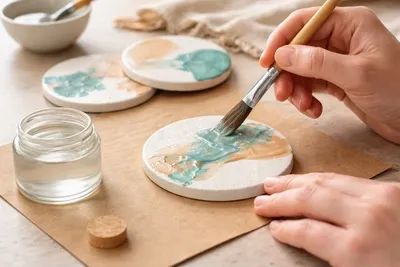
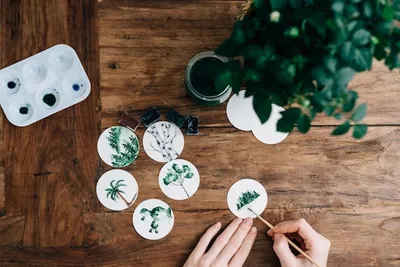
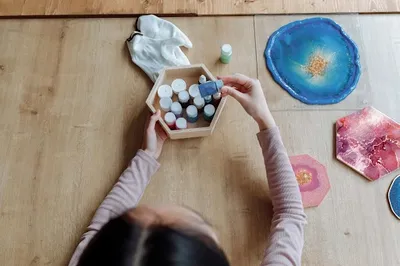
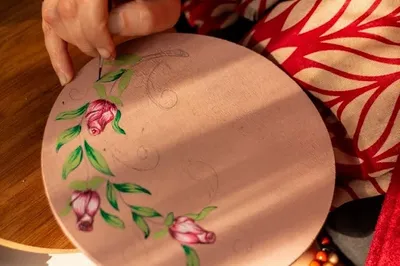
Hand painting cork starts with a light pencil sketch, then acrylic paint or paint pens in layers, and finishes with a clear sealer. It is the most flexible method for one-off, artistic pieces.
Cork's porous face drinks the first coat, so expect two to three coats for bright, even color, letting each dry before the next.
Keep these steps in order:
- Trace or sketch the design lightly onto the cork.
- Paint in thin layers, drying between each.
- Once fully dry, seal with Mod Podge or waterproof varnish.
Sealing is not optional on cork meant for drinks. Cork has very low permeability to liquids once its surface is intact, so a good top coat keeps paint from smearing when a wet glass lands on it.
Print your favorite photos onto coasters as keepsakes
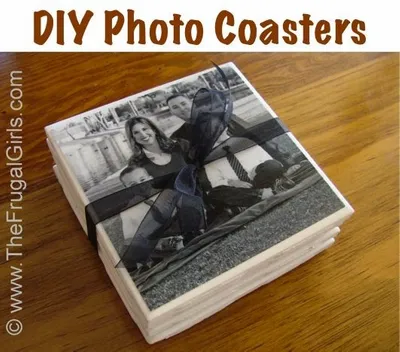
Turn images into custom photo coasters that work as favors guests take home, with names and dates added for weddings, parties, and gifts.
Get startedCan Mod Podge Really Transfer Photos Onto Cork?
Yes, Mod Podge can transfer photos onto cork, giving a soft, rustic look rather than a sharp commercial print. The technique lifts ink from printed paper and bonds it to the cork face.
The paper choice drives the result. Laser prints or photos on thin paper transfer best, while heavy glossy photo paper resists the technique.
Walk it through slowly:
- Coat the cork generously with Mod Podge, then press the image face-down.
- Let it cure fully, often several hours or overnight.
- Wet the back and rub the paper away in gentle layers.
We've seen rushed transfers tear or blur, so the cure time is the step not to skip. The rustic, slightly worn finish is the point - if you want crisp edges, a printed photo coaster is the cleaner route.
How Can You Engrave Stone & Cork Coasters For Premium Results?
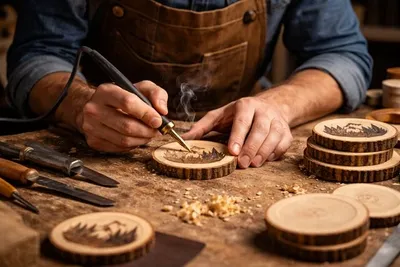
Laser engraving creates a permanent, burned-in design by removing a thin surface layer, a premium, no-fade result. On cork it leaves a clean, recessed mark with natural contrast.
Cork and stone engrave differently. A CO2 laser engraves cork by vaporizing the surface where the beam hits, removing a thin layer of material and leaving a soft darkened etch. Stone is engraved by frosting the surface, so it shows a lighter mark.
Popular machines include the Glowforge and other desktop CO2 lasers. Engraved coasters appeal to premium buyers because the design cannot peel, wash off, or fade. We've seen engraved pieces outlast surface prints by years, so we treat it as the lasting-finish upgrade.
How Can You Make And Sell Custom Cork Coasters Profitably?
You sell cork coasters profitably by pricing for materials plus time, keeping designs repeatable, and selling where buyers already shop. Coasters carry low material cost, so margin comes from clean, consistent work.
Set a price that covers blanks, sealer, and hours, then build in margin. Branding lifts value, since names, dates, and logos let you charge more than a plain blank.
Sell across channels:
- Online: Etsy, your own shop, or print-on-demand listings.
- Local: markets, gift shops, and bar or restaurant accounts.
For wholesale and reorder accounts, our custom print-on-demand coasters fill larger orders without pressing each piece by hand.
Frequently Asked Questions About How To Print On Cork Coasters
How To Print Custom Designs On Cork Coasters At Home?
Use HTV with a heat press or iron for crisp color, or hand paint and seal for a rustic look. Clean the cork first, test your settings, and always seal painted designs before they meet wet glasses.
What Are The Best Ways To Make Cork Coaster Designs Look Professional?
Build artwork at 300 DPI, size it to the coaster face, and pick a method that fits the surface - UV printing or DTF for full color, sublimation for coated cork. A clean sealed finish is what reads as professional.