Best Coasters For Sweaty Drinks: Which Options Absorb Condensation Best?
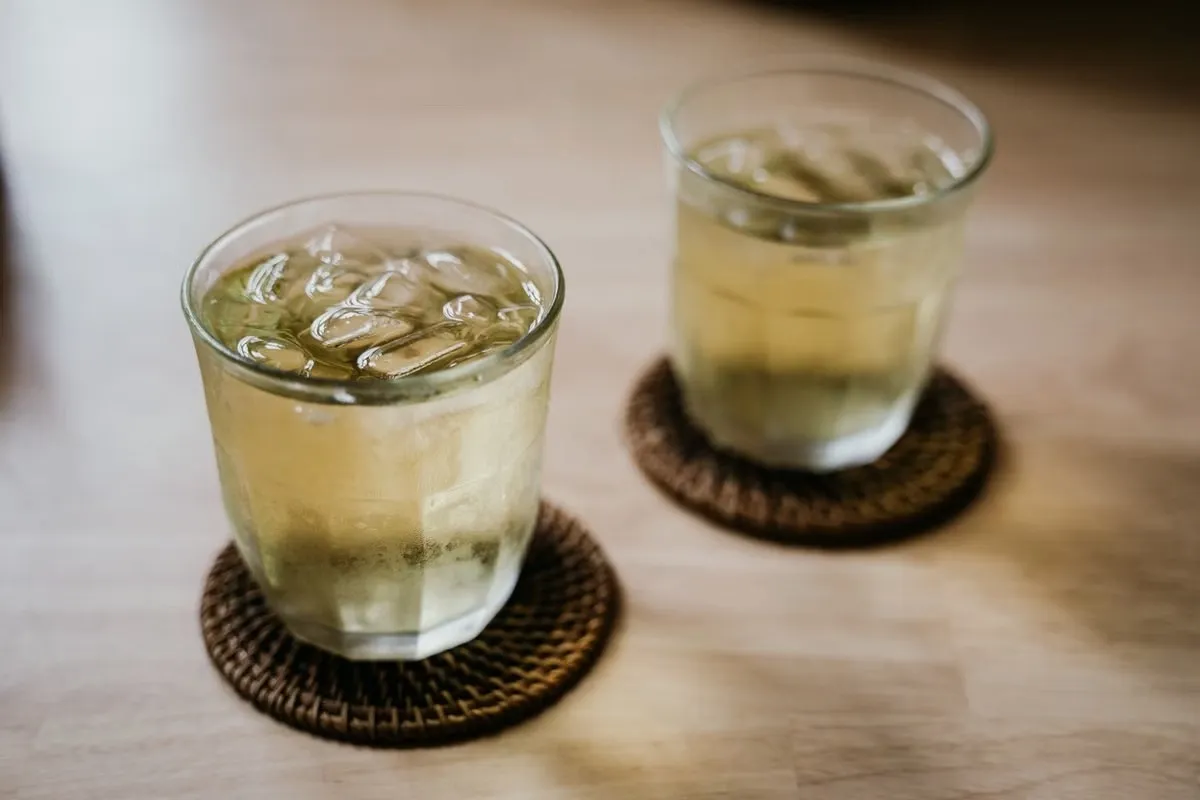
A cold drink on a warm day leaves a puddle under the glass within minutes. The coaster is supposed to stop that, yet plenty just hold the water until it spills. In this guide, we compare the best coasters for sweaty drinks by material so you can match one to your furniture and cleanup habits.

Key Takeaways
- Porous materials win on absorption. Diatomaceous earth, unglazed ceramic, sandstone, pulpboard, and wool felt pull condensation into the coaster instead of leaving it pooled.
- Silicone trays contain rather than absorb. A raised lip holds the water, which suits patios and kitchens where you rinse often.
- Match the material to the surface. Soft felt protects polished wood and glass; stone and ceramic suit hard counters and bar tops.
- We supply high-quality custom coasters in various styles and materials, from absorbent stone and felt to silicone, printed with your names, logos, or artwork at competitive prices.
Table of contents
-
What Are The Best Coasters For Sweaty Drinks?
-
Which Coasters Are The Most Absorbent?
-
How Do Stone And Diatomaceous-Earth Coasters Control Condensation?
-
Do Ceramic Coasters Absorb Moisture?
-
Why Are Merino Wool And Felt Coasters Good For Sweaty Glasses?
-
Are Silicone Coasters Better Than Absorbent Coasters?
-
How Do Hard Surface Coasters Compare For Sweaty Drinks?
-
Which Natural And Decorative Coaster Materials Should You Choose?
What Are The Best Coasters For Sweaty Drinks?
The coasters that handle sweaty drinks well move water away from the glass: porous stone, diatomaceous earth, merino wool felt, absorbent ceramic, pulpboard, cork, and deep-tray silicone. Everything else decorates the table while the ring forms.
Three products stand out: the Dorai Home stone coaster set (diatomaceous earth), the Graf Lantz Bierfilzl (thick merino wool felt), and the Me.Fan silicone coasters (raised tray). The first absorbs fastest, the second is gentlest on furniture, and the third is easiest to rinse.
We've found that no single material suits every room. Quick picks by situation:
- Maximum absorption: diatomaceous earth or unglazed sandstone.
- Delicate furniture: merino wool felt with no hard backing.
- Office desks: thick felt or cork-backed ceramic, which stay put and stay quiet.
- Easy cleaning: deep-tray silicone you can rinse at the sink.
- Decorative tables: cork-backed ceramic or terrazzo with a sealed face.
- Hospitality settings: printed high-density pulpboard (thick pressed paper board), replaced as it wears.
For a longer roundup, see our guide to absorbent condensation coasters.
Which Coasters Are The Most Absorbent?
There is no single standardized test designed specifically to rank finished drink coasters, so comparisons need to control the conditions that can change the result. Material alone is not enough: thickness, density, coatings, backing, previous use, room humidity, and sample size can all affect how quickly a coaster absorbs water and how much it holds.
For a fair comparison, test at least three samples of each coaster under the same indoor conditions. Let every coaster dry completely before testing, then record its dry weight with a digital scale accurate to at least 0.1g.
Use three measurements:
- Absorption speed: Place 1.0mL of water on the face of the coaster and record how many seconds pass before no free water remains visibly pooled on the surface.
- Usable capacity: Add water in 1.0mL increments, allowing each addition to absorb before adding the next. Stop when water remains pooled, runs over the edge, or reaches the furniture-contact surface. Record the total volume absorbed.
- Drying time: Weigh the wet coaster and leave it exposed to air. Record how long it takes to return to within 5% of its original dry weight.
Run each test three times with fully dried samples and report the average. Testing should also record coaster diameter, thickness, backing, whether the face is sealed or unsealed, room temperature, and relative humidity, because those variables can materially change the result.
The approach follows the same basic principle used in recognized material-testing standards: ISO 535 measures water absorptiveness in paper and board, ISO 20158 covers water-absorption time and capacity in absorbent textiles, and ASTM C373 measures water absorption and related properties in ceramic materials.
| Material | Absorption speed | Drying time | Stain risk | Capacity |
|---|---|---|---|---|
| Diatomaceous earth | Very fast | Fast | Medium (coffee, wine) | High |
| Unglazed ceramic | Fast | Moderate | Medium | High |
| Sandstone | Fast | Moderate | Medium-high | High |
| Pulpboard | Fast | Slow | Low (replaceable) | Medium, then saturates |
| Wool felt | Medium | Slow | High on pale colors | High |
| Cork | Low | Fast | Low | Low |
| Cotton / jute | Medium / low | Slow | Medium | Medium / low |
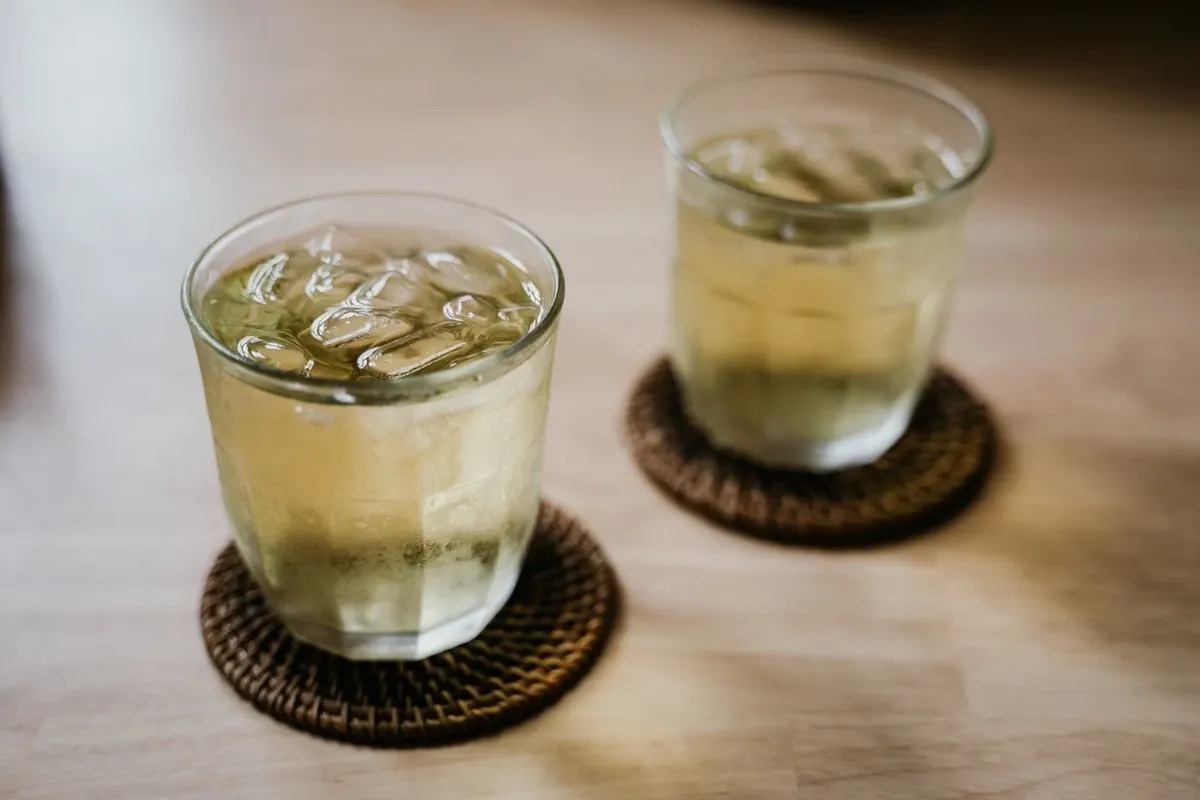
Absorbing and trapping are different jobs. Absorbent coasters pull water into a porous structure, which the USGS describes as movement within the spaces of a porous material. Grooved and tray coasters only hold water until you lift them.
One honest note: no universal test crowns one product as the most absorbent coaster in the world. Results shift with density, thickness, finish, and humidity. Our printed custom drink coasters in 3mm to 5mm pulpboard absorb well for a night, then get swapped out, a different job than stone that lasts years.
Academic research into beverage-coaster paper likewise treats water absorption as a core performance requirement; Dölle's experimental coaster paper achieved water absorption values of 784 g/m² on its top surface and 693 g/m² on its wire side.
Why Do Some Coaster Materials Absorb Condensation Better Than Others?
Porous materials absorb better because tiny open pores wick water off the glass, then expose it to air. A 2025 review in Mining, Metallurgy and Exploration describes diatomite as notable for its high porosity and low density, which is why it pulls a ring dry so quickly.
Coatings change everything. A natural, unsealed face stays open; a glaze or resin topcoat seals the pores, so a glossy "stone" coaster behaves like glass.
Before trusting a coated coaster with an iced drink, run a two-minute test: set a sweating glass on it, lift, and check whether the ring soaked in or sat on top. We've seen plenty of decorative coasters fail it.
Need coasters that actually soak up condensation?
Work with us to print custom stone coasters for drinks that pull moisture off the glass and carry your name, logo, or artwork.
How Do Stone And Diatomaceous-Earth Coasters Control Condensation?
Highly porous stone and diatomaceous earth pull moisture into the coaster body and spread it wide, so it evaporates instead of pooling. Diatomaceous earth (a soft rock of fossilized algae shells) is the lightest and most open.
The Dorai Home stone coaster set is the diatomaceous-earth option people ask us about most. Other stone builds:
- Kleo natural stone coasters: natural stone, heavier than diatomaceous earth.
- Worhe natural travertine coasters: pitted limestone, decent absorption, earthy look.
- Gocraft terrazzo coasters: stone chips in a binder; absorbency depends on how much binder covers the face.
- Better Home diatomite coaster set: a second diatomaceous-earth choice.
Trade-offs are real. Stone stains from coffee, red wine, and citrus, diatomaceous earth chips if dropped, and an unbacked edge will scratch a soft finish. We've noticed that cork or rubber backing solves most scratch complaints.
Work with us to print custom stone coasters for drinks with your logo or family name, with generous bulk discounts on larger orders.
Which Stone Coasters Perform Best For Cold Drinks?
For iced drinks, diatomaceous earth beats denser stone on speed, while sandstone holds more before it saturates. Backing matters as much as the stone:
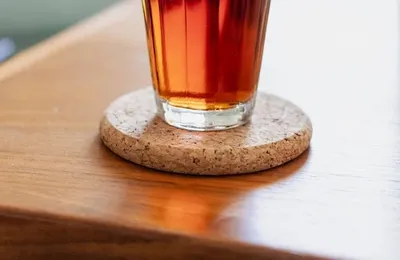
- Cork backing grips and cushions; our default recommendation.
- Rubber or silicone feet grip glass tops well but mark lacquer.
- Bare stone suits granite counters and nowhere else.
On stains, the more open the stone, the faster it drinks a spill and the faster it stains. Keep diatomaceous earth for water and soda, and use a sealed face where wine is served.
Choose felt coasters for polished wood and glass tables
Our custom felt coasters sit quietly, absorb drips from sweaty glasses, and can be printed with names, dates, or a brand mark.
Learn moreDo Ceramic Coasters Absorb Moisture?
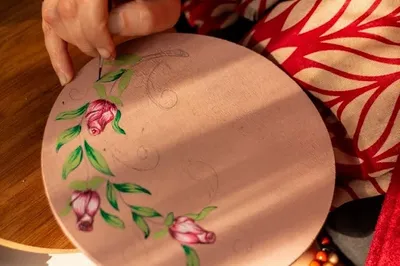
Yes, unglazed (bisque) ceramic absorbs moisture, and glazed ceramic does not. Unglazed earthenware stays porous, which the Florida Museum describes as the softest and least compact of the ceramic bodies. A glossy glazed coaster is glass as far as condensation is concerned.
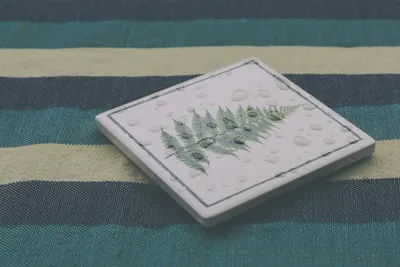
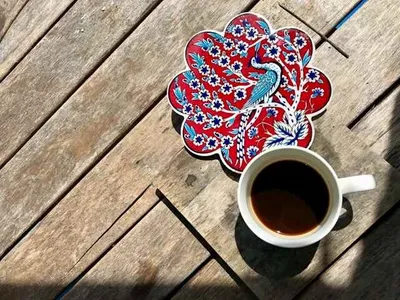
Good absorbent ceramic coasters share one build: bisque top face, fired-in design, cork backing that stops sliding and scratching.
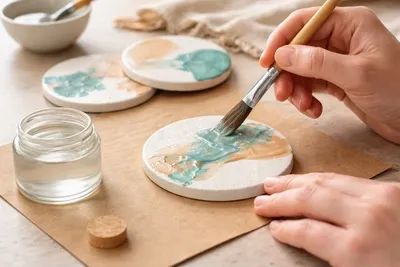
Decoration works against absorbency. A full-color glaze looks great and sheds water; an absorbent face limits you to matte, fired-in designs. Against stone, ceramic is thinner and chips sooner; against silicone, it absorbs instead of containing.
Which Ceramic Coasters Offer The Best Moisture Control?
The ceramic coasters that control moisture well are absorbent bisque tiles with cork backs, usually about 4 inches across. Thin tiles saturate in one drink; thicker ones last a dinner.
Cork lifts the tile a few millimeters, so the coaster dries from both faces. We've found that unbacked tiles stay damp underneath and mark bare wood.
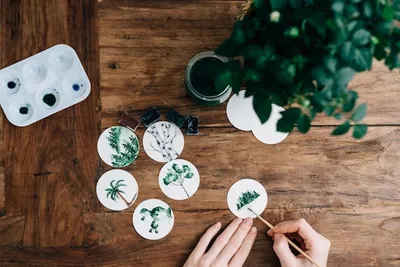
Fired-in designs outlast printed labels. Before buying, verify the construction: ask whether the face is glazed or bisque, since photos rarely show the difference. Our custom ceramic coasters in bulk can be printed to match a menu or event theme.
Why Are Merino Wool And Felt Coasters Good For Sweaty Glasses?
Dense wool fibers absorb condensation into the fiber itself, so water never forms a puddle and the coaster never scratches the table. CSIRO notes that wool can take up to around 30% of its dry mass in water without feeling wet, which is why a felt coaster feels dry while holding a full ring.
Felt wins on four points:
- Quiet placement: no clink on glass tables.
- Softness: safe on lacquer, veneer, and piano finishes.
- Insulation: thick felt keeps the table from chilling, so less condenses under the coaster.
- No sticking: the fuzzy face breaks the suction that lifts thin coasters.
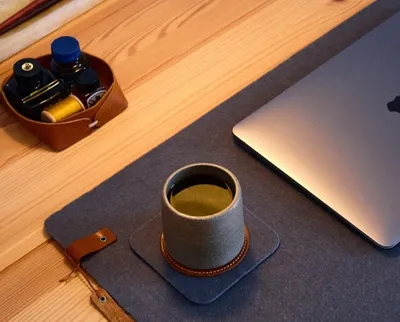
The Graf Lantz Bierfilzl is thick merino wool felt; Bashi felt coasters and Haoser gray felt drink coasters are lower-priced felt alternatives. Denser, thicker felt holds more and curls later.
Pale felt shows coffee and wine stains quickly. Blot with cool water, spot clean with mild soap, and air-dry completely before reuse. Our custom felt coasters can be ordered in darker shades that hide everyday marks.
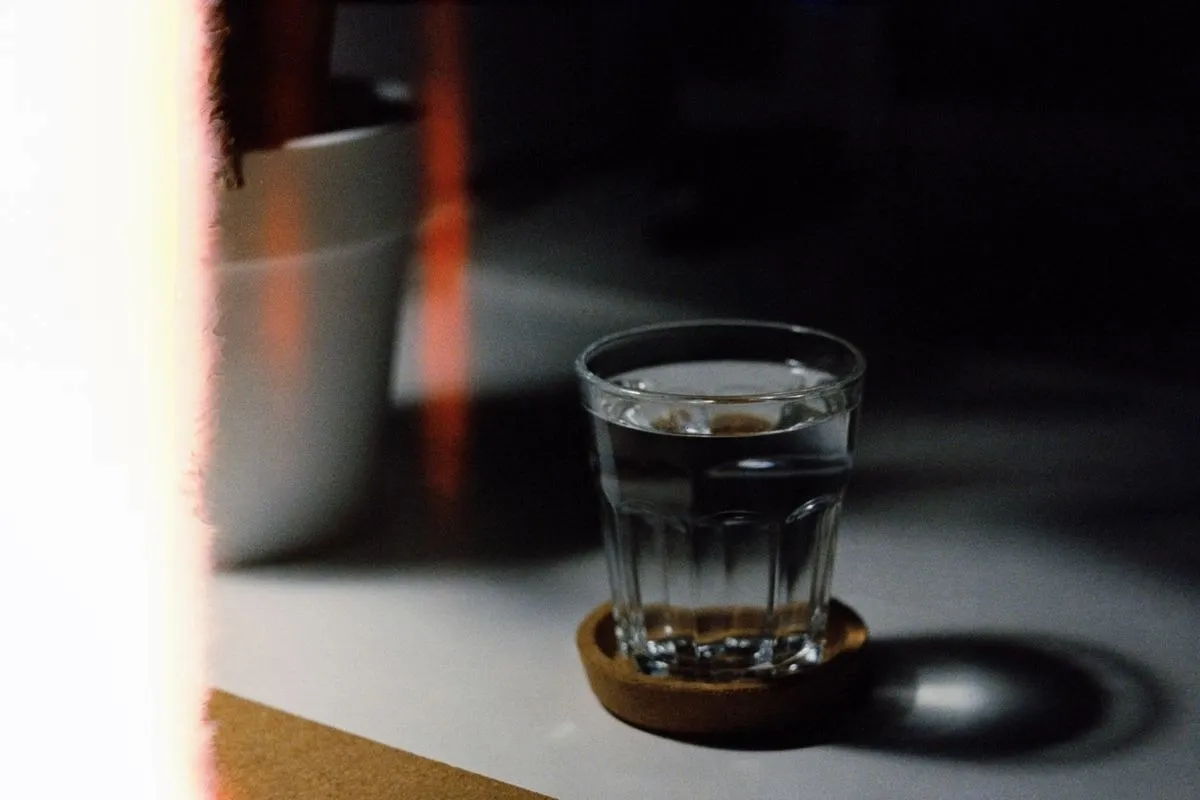
When Should You Choose Felt Instead Of Stone?
Choose felt for polished wood, glass furniture, quiet offices, bedside tables, and any home where scratching is the main worry. Choose stone when absorption speed and a dry surface within minutes matter more, such as a patio bar or kitchen island.
| Factor | Felt | Stone |
|---|---|---|
| Cleaning | Spot clean, slow to dry | Rinse, sun-dry, light sanding if stained |
| Stain visibility | High on pale colors | Medium, permanent once set |
| Stability | Sits flat, silent | Heavy, needs backing |
| Longevity | Curls and stains with daily use | Many years unless dropped |
| Appearance | Soft, casual | Earthy, substantial |
One caveat from our own tables: felt takes hours to dry, so a busy bar top needs two sets in rotation or a switch to stone or pulpboard.
Prefer a coaster you can rinse and reuse?
Custom silicone coasters hold overflow inside a raised lip, wipe clean in seconds, and take any design you send us.
Are Silicone Coasters Better Than Absorbent Coasters?
Silicone coasters are better at containing water; absorbent coasters are better at removing it. Silicone soaks up nothing: a tray holds condensation in a shallow well until you pour it out, while a flat disc lets it run off the edge.
This approach is also reflected in recent coaster-design research, where condensation collection was incorporated directly into the coaster's functional design.
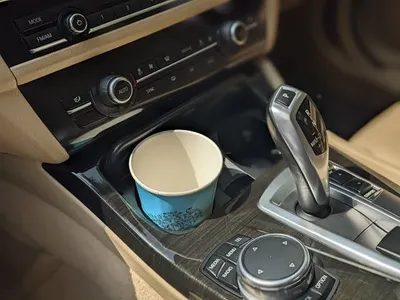
Tray-style silicone suits patios, kids' tables, and car cup holders, where a contained puddle beats a soaked coaster. Flat silicone protects against heat and scratches but does little for a sweating glass.
Maintenance is where silicone earns its place. Many sets are sold as top-rack washable; check the maker's label, since printed faces vary.
Silicone also grips the table, survives drops, and bends without cracking. If coasters lifting with the glass is your frustration, our guide to coasters that don't stick covers the fixes.
How Do Deep-Tray Silicone Coasters Prevent Water Damage?
A deep-tray silicone coaster catches overflow inside a raised edge, so even a fully sweated glass cannot send water across the table. Better trays add a ridged floor that lifts the glass a millimeter or two so air moves underneath.
That texture does a second job. A smooth wet surface forms a vacuum seal with the base of a glass, which is why thin coasters ride up with the drink. Ridges break the seal.
Before buying, check five things: tray depth (at least 5mm, or a tall glass overflows it), base grip, stability under a heavy tumbler, diameter (4 inches covers most pint glasses), and any heat-rating claim, which should name a temperature.
Need large quantities of absorbent coasters for a bar?
Order custom bar coasters in bulk with your logo or QR code, taking advantage of generous wholesale discounts and a free proof.
Get startedHow Do Hard Surface Coasters Compare For Sweaty Drinks?
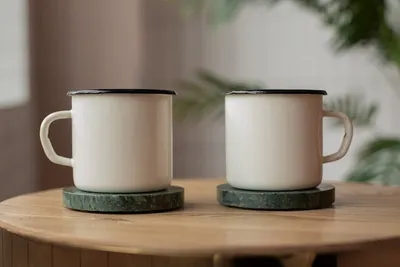
Wood, marble, and slate coasters protect the table more than they absorb, so they suit hot mugs better than iced drinks. Unsealed slate takes up a little water, polished marble almost none, and wood depends on its finish.
Bare wood soaks up condensation and warps or cracks; varnished wood sheds it onto the table. Marble is porous but arrives polished, so water beads until it etches the stone. Our guide on whether marble coasters absorb water goes deeper on the etching problem.
Sealing is the decision point. Seal wood and marble to protect the coaster, and accept that the table then needs a felt pad. Leave slate raw for some absorption and expect gray marks that fade as it dries.
Whatever the material, add a cork or felt backing.
Which Hard-Surface Coaster Is Best For Different Settings?
For homes, cork-backed slate is the most forgiving hard coaster; for offices, sealed wood on a felt pad; for cafés, slate or sealed marble that wipes clean; for decorative tables, polished marble with dry glasses only.
Slate edges out the others because it absorbs a little and hides water marks. Sealed wood does nothing for condensation, so pair it with an absorbent option for iced drinks.
Wood needs fresh oil or varnish every year or two. Marble needs a stone sealer every 6 to 12 months and a wipe after acidic drinks. Slate needs a rinse and an occasional rub of mineral oil.
For a bar that wants absorbency built in, work with us on custom bar coasters in bulk: printed pulpboard, 3mm to 5mm thick, branded with your logo, at generous bulk discounts.
Which Natural And Decorative Coaster Materials Should You Choose?
Cork and cotton are the natural materials that absorb; rattan, leather, glass, tile, and metal are mostly decorative and shed water. Jute and crochet catch early drips, then let the rest through. Under a sweating glass:
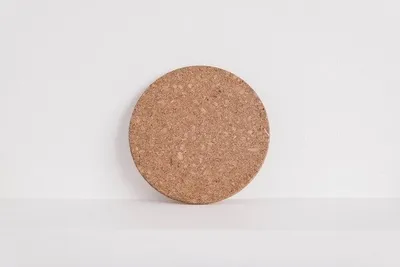
- Cork: takes the first drips, then beads. A 2015 review in BioResources explains why: cork cells are closed and air-filled, so water moves through it very slowly.
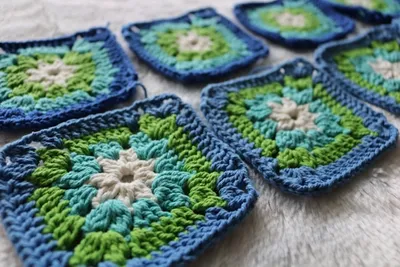
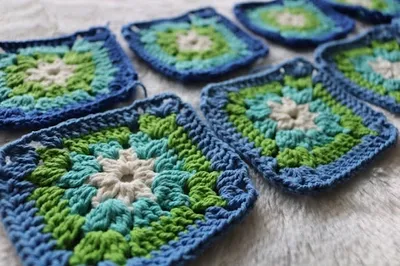
- Cotton and crochet: absorbent and washable; stains set fast.
- Jute and rattan: casual look, low absorbency, drips through the weave.
- Leather: sheds water when finished, darkens when raw.
- Glass, tile, and metal: zero absorption; use them for hot mugs.
Match the material to the furniture (soft on soft, hard on hard), the décor (cork and felt read casual, marble and slate formal), and the drinks you serve. An iced-coffee household needs more absorbency than a wine-at-dinner one. Our custom cork coasters in bulk cover the casual end with your design printed on top.
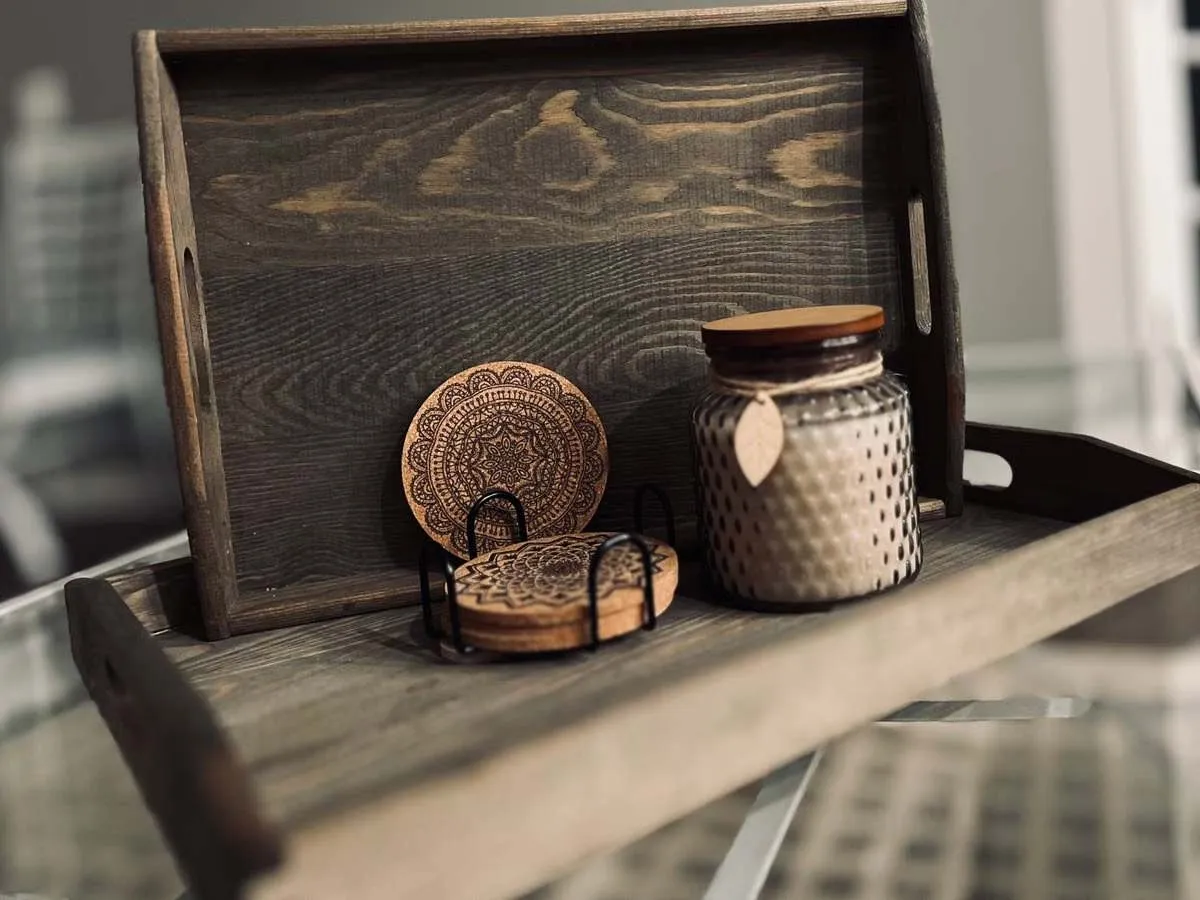
What Should You Look For Before Buying Coasters For Sweaty Drinks?
Check four things before buying: absorbency (an unsealed porous face), durability (will it chip, curl, or warp), thickness (5mm or more for stone or felt, 3mm for pulpboard), and backing (cork or silicone on anything hard).
Then weigh the surface against the cleaning you will actually do. Felt needs spot cleaning and an air-dry, stone a rinse and a sunny windowsill, silicone a sink, pulpboard a trash can.
A household runs one premium set for years. An office wants something quiet that hides stains. A bar needs dozens of identical coasters that look sharp tonight and get replaced next week.
Last, NOAA explains a sweating glass simply: air touching the glass cools below the dew point and its water vapor condenses. That happens every humid day, so choose the coaster that handles it every day.
Frequently Asked Questions About Best Coasters For Sweaty Drinks
Which Coasters Work Best For Sweaty Drinks?
Diatomaceous earth, unglazed ceramic, sandstone, and thick merino wool felt handle sweaty drinks best because they absorb the condensation. Deep-tray silicone is the pick when you would rather rinse than dry.
Which Coasters Are The Most Absorbent?
Diatomaceous earth and unglazed ceramic absorb fastest, with sandstone and pulpboard close behind. No product holds a verified world record, since results depend on thickness, density, finish, and humidity.