Christmas Coaster Designs: Which Festive Styles And Materials Should You Choose?
Holiday tables take a beating: cocoa mugs, sweating punch glasses, and a month of guests leave rings that outlast the tree. Coasters fix that and double as decor. In this guide, we sort Christmas coaster designs by style, material, and use, so you can pick, make, or order the right set.

Key Takeaways
- Match the material to the drink. Cork and felt handle sweating glasses; ceramic and stone shrug off hot mugs; wood needs a sealed finish for either.
- Four inches is the safe size. A 4" coaster covers most mugs and tumblers, and a non-slip backing matters more than you'd expect.
- Handmade suits the home, printed suits the crowd. Crochet and resin are rewarding weekend projects; a bar, office, or event with 50 or more seats is a print job.
- We supply high-quality custom coasters in various styles and materials, printed with names, logos, or holiday artwork at competitive prices with generous bulk discounts.
Table of contents
-
Christmas Coaster Designs
-
How To Make Christmas Coasters?
-
Which Handmade Christmas Coaster Designs Add The Most Charm?
-
Which Wooden Christmas Coaster Designs Are Most Popular?
-
Which Christmas Themed Coaster Designs Stand Out Most?
-
Which Christmas Coaster Materials Perform Best?
-
Which Christmas Coaster Sets Make The Best Holiday Gifts?
-
How Do You Choose The Best Christmas Coasters?
Christmas Coaster Designs
Christmas coasters are decorative drink mats that protect dining tables, desks, bars, and coffee tables through the holiday season. The good ones stop water rings and carry the theme.
Most designs fall into four buckets:
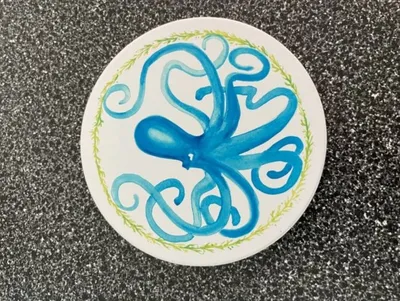
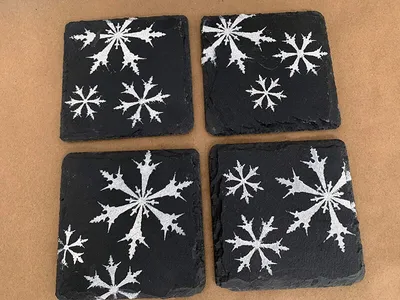
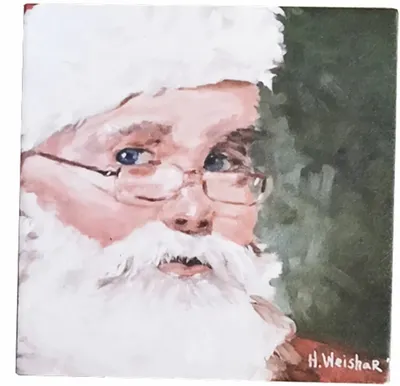
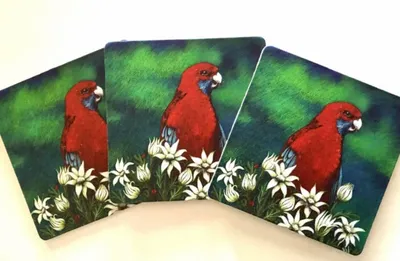
- Painted and printed: snowflakes, plaid, Santa, and greetings on cork, wood, or pulpboard.
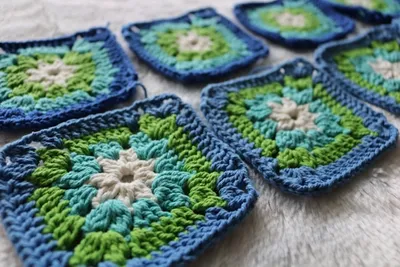
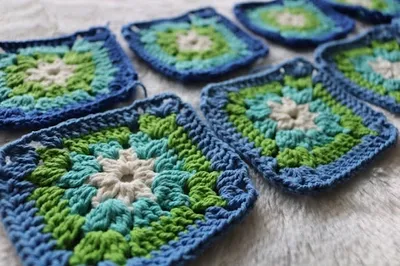
- Crocheted and woven: reindeer, gingerbread, and granny squares in cotton yarn.
- Wood, acrylic, and metal: engraved trees, laser-cut snowflakes, gold-rimmed discs.
- Felt, cork, and eco options: die-cut trees and stars, rice husk blends, recycled cork.
The right pick depends on color, material, shape, absorbency, heat resistance, and table style. Bare wood looks wrong under a sweating glass.
| Material | Cold drinks | Hot mugs | Best table |
|---|---|---|---|
| Cork | Good, absorbs | Good, insulates | Rustic, farmhouse |
| Felt | Good, absorbs | Fair | Casual, kids' table |
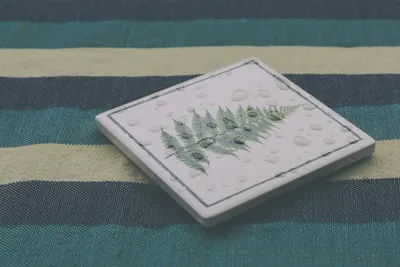
| Ceramic / stone | Fair, unless unglazed | Good | Formal dining |
| Sealed wood | Fair, finish-dependent | Fair | Rustic, modern |
| Resin / acrylic | Poor, water pools | Poor, can soften | Display, gifting |
| Printed pulpboard | Good, absorbs | Good | Bars, events, bulk |
We've found that the common mistake is choosing a set by its picture alone. For a themed set with your own artwork, custom personalized Christmas coasters can be printed in several materials.
Which Christmas Drink Coasters Work Best For Different Occasions?
Casual family gatherings can use anything that absorbs: felt, cork, or crochet. Dinner parties, offices, cafés, and bars need a polished, uniform set.
- Homes with children: playful gnomes, snowmen, or reindeer in felt or cork, which wipe clean.
- Formal tables: refined wood, beaded, or metallic styles in one color family.
- Bars and cafés: a printed set in the venue's colors, enough for every seat plus spares.
Sets with holders, stands, or gift boxes earn their cost when the coasters will be displayed or given away.
How To Make Christmas Coasters?
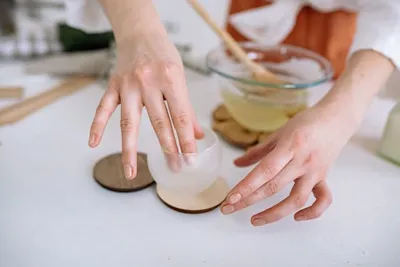
Making Christmas coasters comes down to five jobs: choose a base, prepare the surface, add the design, seal it, and attach a backing.
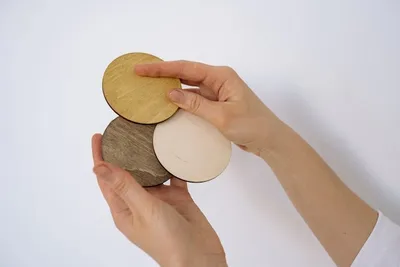
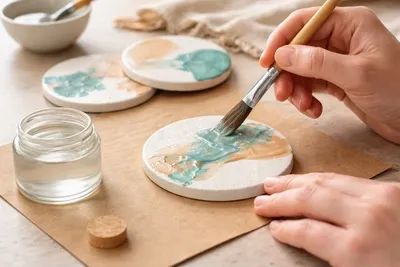
- Pick a base. Unfinished wood rounds, 4" ceramic tiles, cork sheets, MDF blanks, stiff felt, coiled rope, or a silicone resin mold. Tiles cost least.
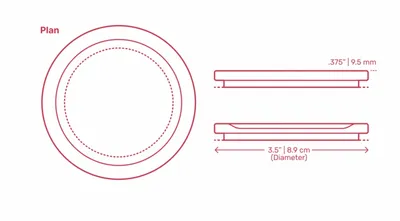
- Size it at about 4 inches. That covers a standard mug base (about 3") and most tumblers; go to 4.5" for big cocoa mugs.
- Prep the surface. Sand wood and MDF with 220-grit, wipe tiles with rubbing alcohol, and lint-roll felt.
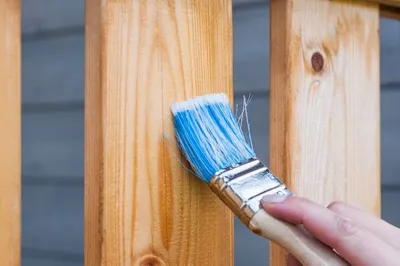
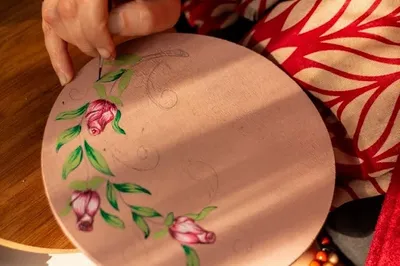
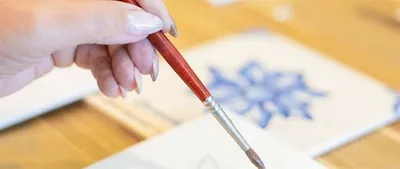
- Add the design. Acrylic paint, vinyl decals, napkin decoupage, or a printed image glued flat. Keep art a quarter inch from the edge.
- Seal it. Two to three thin coats of water-based polyurethane, 2 hours apart. For heat, a clear epoxy topcoat outlasts spray varnish.
- Let it cure. Dry to the touch is not cured. Give sealers 24 to 72 hours; we've seen sets ruined on night one by a mug on a tacky finish.
- Finish edges and back it. Sand sharp edges, then glue cork, felt, or silicone feet underneath so it doesn't slide or scratch.
One honest caveat: heat resistance depends on the sealer. Most hobby sealers tolerate a warm mug, not a teapot off the stove.
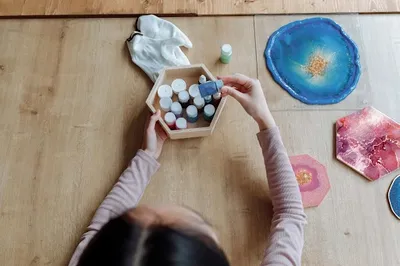
How Do You Make Resin Christmas Coasters?
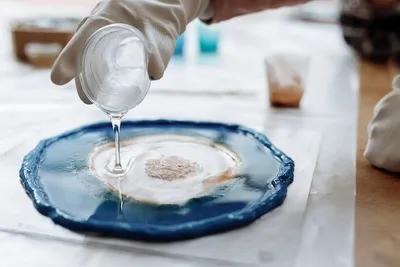
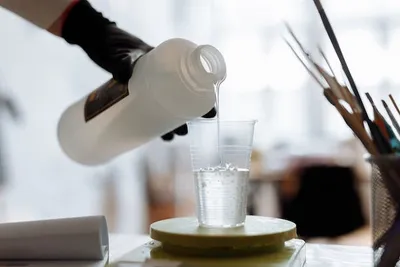
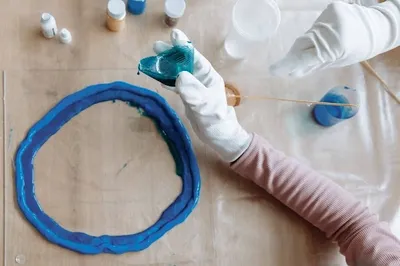
Resin Christmas coasters start with a silicone mold and a casting resin mixed exactly to the maker's ratio; eyeballing it causes sticky, cloudy pours.
- Prep and level the mold. A tilted mold gives a wedge-shaped coaster.
- Measure and mix slowly for the full time on the label, scraping the sides.
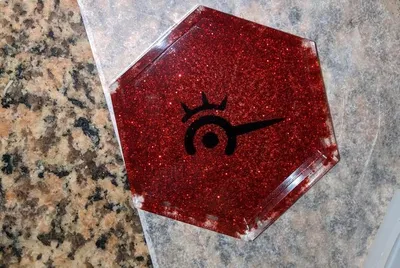
- Add the festive layer: glitter, dried greenery, miniature snowflakes, confetti, a cut-vinyl message, or a printed image sealed first so it doesn't bleed.
- Remove bubbles with a quick pass of a heat gun, then let it rest 5 minutes and repeat.
- Cure, demold, sand. Many resins demold in about 24 hours and fully cure in 3 to 7 days; check the label. Sand sharp edges with 400-grit, then add cork feet.
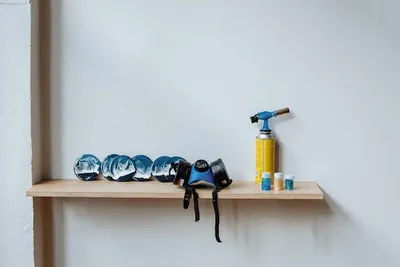
Uncured epoxy and amine hardeners are known skin allergens that can cause a lasting allergy; a 2008 construction-safety guide advises nitrile or butyl gloves, never cotton or latex, plus a fan pulling air away from you.
Choose a resin rated for the heat it will see, since many art resins soften under a hot mug; our DIY resin coasters guide covers the full process.
We’ve made a Christmas coaster troubleshooting guide, just in case:
| Problem | Likely cause | What to do |
|---|---|---|
| Resin stays sticky or soft | Incorrect resin-to-hardener ratio, incomplete mixing, or insufficient curing time | Check the manufacturer's ratio and cure schedule. Do not add another coat over uncured resin. |
| Bubbles remain in resin | Air introduced during fast mixing or trapped around decorations | Mix slowly, let the pour rest briefly, and remove surface bubbles according to the resin manufacturer's instructions. |
| Resin turns cloudy | Poor mixing, moisture contamination, or unsuitable embedded materials | Keep molds and decorations dry and seal porous paper or printed images before embedding them. |
| Wood coaster warps | Uneven moisture exposure or finish applied to only one face | Let the wood dry completely and seal the edges and both sides rather than only the decorative face. |
| Paint peels or chips | Surface was dusty, oily, or insufficiently prepared before painting | Sand and clean the base before repainting, then apply compatible thin coats and allow them to cure. |
| Water marks appear on wood | Moisture has reached the wood through worn finish, edges, or scratches | Dry the coaster thoroughly, lightly refinish the affected area, and reseal exposed edges. |
| Decoupage lifts at the edges | Too much adhesive, trapped moisture, or sealing before the layer dried | Let each layer dry fully, flatten loose edges, and apply several thin protective coats instead of one heavy coat. |
| Crochet coaster curls | Uneven stitch tension or the finished piece has not been blocked | Dampen it, reshape it to the correct size, pin it flat, and let it dry completely. |
| Coaster slides on the table | Smooth or unfinished underside | Add cork, felt, or silicone feet to create grip and protect the tabletop. |
Looking for Christmas coasters with your own design?
Work with us to create custom personalized Christmas coasters printed with your names, logo, or holiday artwork in the material that suits your table.
Which Handmade Christmas Coaster Designs Add The Most Charm?
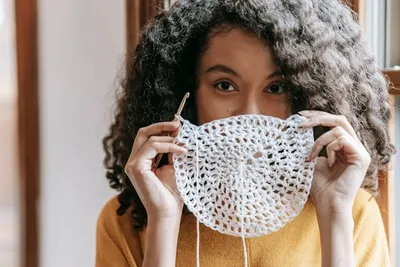
For charm per hour of effort, crochet and rope coasters win, with macramé and woven styles close behind. All four are absorbent and forgiving.
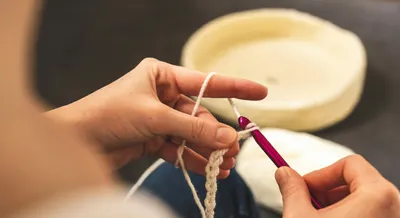
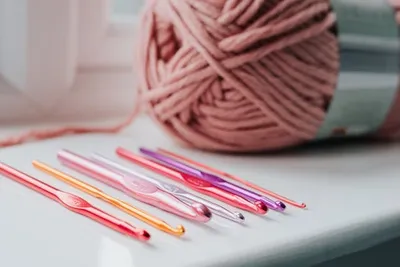
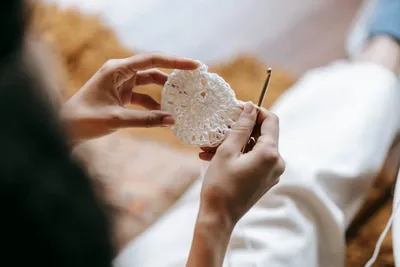
- Crochet: the most absorbent and easiest to wash. Use 100% cotton yarn; acrylic repels water and can melt under high heat.
- Macramé: decorative, slower, and the knots trap crumbs.
- Woven and rope: thick enough to insulate a hot mug; coil cotton clothesline and stitch it.
Rustic sets use jute, cream cotton, and red accents; modern sets use one color and tight stitches. Wash cotton in cool water and dry flat. Our caveat: fabric coasters soak through under a sweating glass, so keep a second set ready.
Which Crochet Christmas Coaster Patterns Are Worth Making?
Reindeer, gingerbread, poinsettia, and granny-square patterns cover the range from one evening to a weekend. Pick by skill, not by looks.
- Granny square (beginner): four rounds in red, green, and white, about 30 minutes each.
- Poinsettia (beginner to intermediate): a flat flower with a contrasting center.
- Reindeer and gingerbread (intermediate): worked corner-to-corner, called C2C, building a pixel-style grid diagonally from a chart.
Traditional crochet works in rounds from the center out and gives a cleaner circle. C2C gives you pictures but a slight bias, so block it by pinning the damp piece to shape until dry. For starter patterns, see our crochet coasters for beginners guide.
Dress your bar or restaurant tables for the holidays
Our custom restaurant coasters carry a seasonal menu, a QR code, or a festive logo, so every drink you serve in December quietly promotes your venue.
Learn moreWhich Wooden Christmas Coaster Designs Are Most Popular?
In the holiday orders we see, engraved trees and snowflakes on solid wood rounds lead, with painted plaid close behind. Demand shifts, so treat this as what we see, not a forecast.
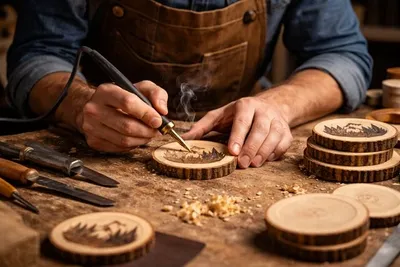
- Solid wood (maple, walnut, acacia): durable, engraves well, costs most.
- MDF: flat and cheap, good for paint, swells if water gets in.
- Laser-cut: intricate lattices, but gaps let drips through.
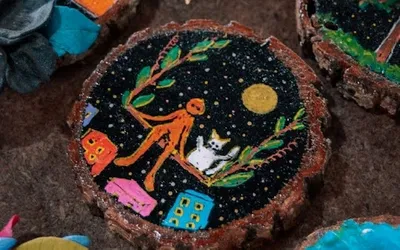
- Hand-painted: the most personal, least durable without a sealer.
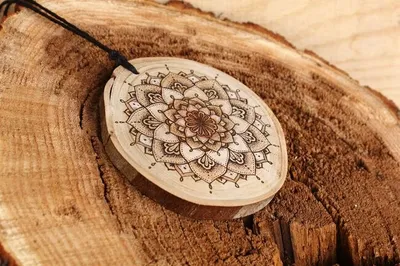
Wood needs moisture protection. The USDA Forest Products Laboratory notes that water enters wood through the end grain far faster than through the face, so seal the edges, not just the top. For a branded set, custom wood coasters can be engraved with a logo or a family name.
Should You Choose Engraved, Painted, Or Printed Wooden Coasters?
Engraved lasts longest, printed gives the most color, and painted is the cheapest to make yourself.
| Style | Look | Durability | Care |
|---|---|---|---|
| Engraved | Tone-on-tone, subtle | Can't wear off | Re-oil yearly |
| Painted | Bright, handmade | Chips at edges | Seal, hand wash |
| Printed | Full color, photo-ready | Good under a clear coat | Wipe dry |
Scandinavian rooms suit engraved pale wood; farmhouse rooms take painted plaid or printed trucks. Wipe wood coasters dry daily and re-seal once a season; our best finish for wood coasters guide compares the options.
Which Christmas Themed Coaster Designs Stand Out Most?
Themes stand out when they match the rest of the room; a snowflake set disappears in a white kitchen but pops on dark wood.
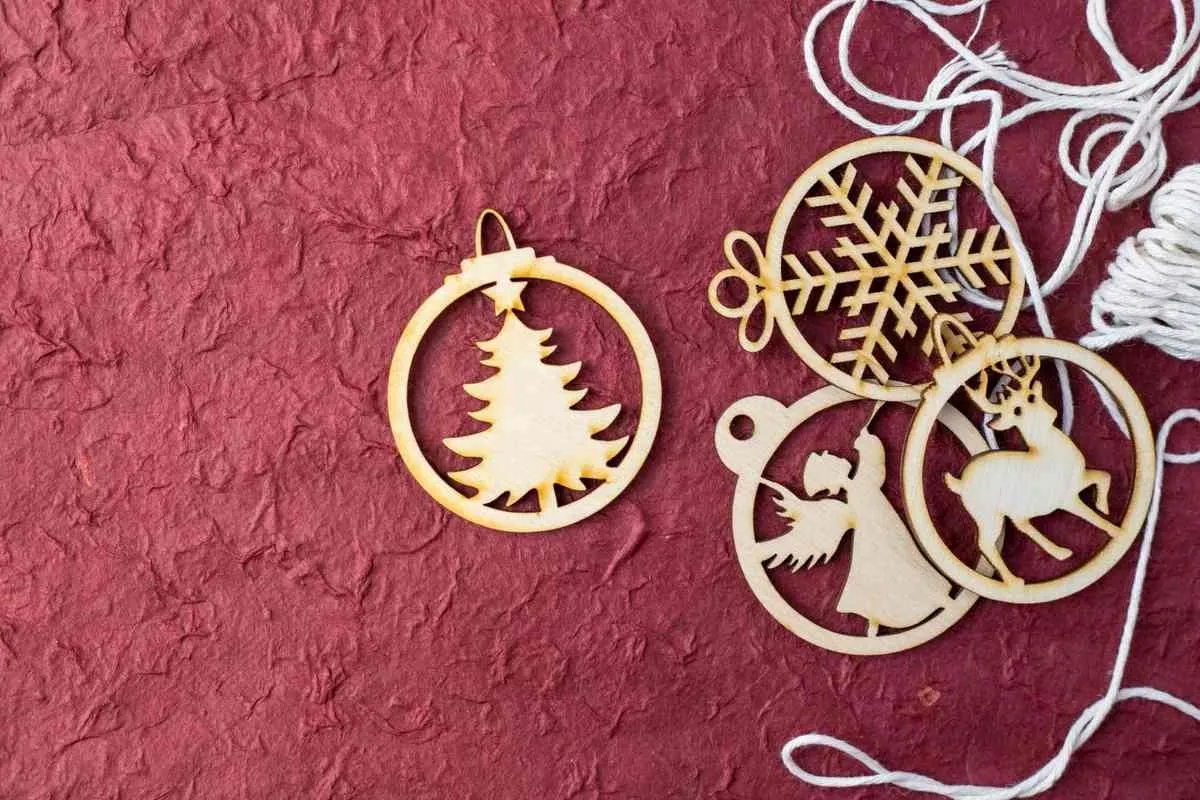
- Christmas trees and snowflakes: elegant, safe for offices and formal dinners.
- Santa, snowmen, and gnomes: playful, ideal for family rooms and kids' tables.
- Reindeer and candy canes: bridge both styles depending on color.
- Vintage trucks: farmhouse and rustic, usually red on cream or wood.
Playful styling uses three or more colors and cartoon shapes; elegant styling uses one or two colors and metallic accents. Pick the one your decor already follows.
Work with us if you run a bar or café. A seasonal set of custom restaurant coasters in your colors, with a QR code to the holiday menu, is a small spend that reaches every seat.
Which Christmas Characters And Holiday Patterns Create The Most Festive Tables?
Character designs make a table feel festive fastest; decorative patterns make it feel finished. Mix one character set with a patterned runner.
- Pick a palette of three: red, green, and cream; icy blue, silver, and white; or forest green, gold, and black.
- Repeat one motif across coasters, napkins, and place cards.
- Match mugs to coasters by color, not by print.
For a themed place setting, a coaster under each glass, an ornament on the napkin, and a name card cover it. We've seen tables with twice the decor look less festive.
Need holiday coasters for a whole guest list or staff?
Order custom coasters in bulk for corporate gifts, office parties, and events, with generous bulk discounts and a free proof before you pay.
Which Christmas Coaster Materials Perform Best?
Cork and pulpboard perform best for wet drinks, ceramic and stone for hot ones, and wood, acrylic, and resin mostly for looks.
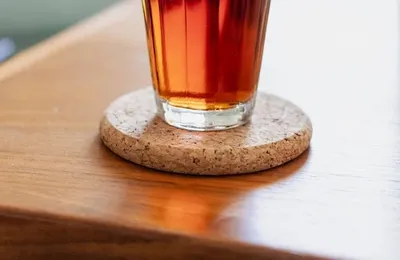
- Cork: a 2015 materials review describes cork's closed cells as impermeable to liquids and a strong thermal insulator, which is why it works under hot and cold drinks alike.
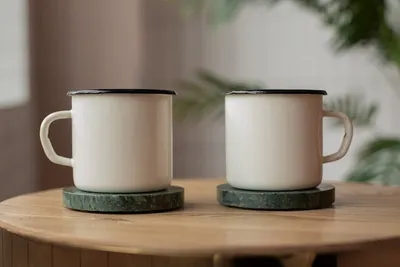
- Ceramic: heat-proof; unglazed faces absorb, glazed faces pool water.
- Felt and rope: absorbent, washable, slow drying.
- Acrylic and resin: waterproof, nonabsorbent, scratch over time.
- Metal: durable, but it sweats under cold glasses and heats under hot mugs.
- Rice husk and beaded: the eco pick and the display pick.
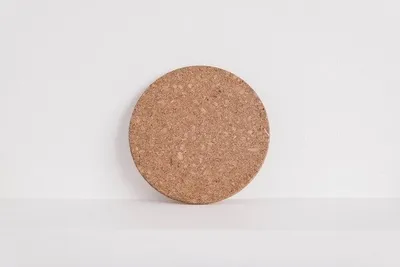
Pulpboard is dense compressed paper that absorbs and is effectively disposable, so bars keep a spare box. For a rustic bulk set, custom cork coasters in bulk take printed holiday artwork.
For cold drinks that sweat, absorption matters as much as water resistance. A waterproof coaster can protect itself while still leaving a puddle around the bottom of the glass. Absorbent materials catch that condensation instead.
| Material | Condensation control | What happens to water? | Drying | Best use |
|---|---|---|---|---|
| Cork | Excellent | Absorbs small amounts rather than letting them pool | Moderate | Iced drinks, everyday use |
| Pulpboard | Excellent | Pulls moisture into the coaster | Fast to moderate | Bars, parties, disposable sets |
| Felt | Good | Absorbs condensation but can eventually soak through | Slow | Casual home use |
| Unglazed ceramic/stone | Good | Porous surface absorbs moisture | Moderate | Cold or hot drinks |
| Glazed ceramic | Poor | Water stays on the surface and can pool | Wipe dry | Hot mugs |
| Sealed wood | Fair | Finish blocks absorption, so water may bead or pool | Fast after wiping | Light condensation |
| Resin/acrylic | Poor | Nonabsorbent surface leaves condensation sitting on top | Fast after wiping | Decorative or gift sets |
Which Christmas Coaster Material Is Best For Everyday Use?
For everyday December use, cork is the all-rounder, with glazed ceramic a close second for coffee and tea households.
A 2019 review of hot beverage research puts the recommended serving range at 130 to 160 °F, warm enough to soften some resins over a season.
- Coffee and tea homes: ceramic, stone, or cork.
- Iced drinks and soda homes: cork, felt, or pulpboard.
- Homes with kids or pets: felt and cork, which survive drops.
- Display-first homes: resin or acrylic, with a cork set in reserve.
Cleaning: wipe cork and ceramic, hand wash felt and crochet, never soak wood.
Put your brand on a Christmas giveaway people keep
Custom logo coasters in a holiday colorway make a low-cost client gift or event handout that stays on desks long after the season ends.
Get startedWhich Christmas Coaster Sets Make The Best Holiday Gifts?
The coaster sets that land best as gifts are practical ones the recipient will use in January, boxed in fours or sixes.
A 2014 Journal of Consumer Research study found that givers lean toward impressive gifts while recipients weigh practicality more heavily.
- Secret Santa: a four-pack of cork or felt with a cheeky print.
- Hosts: ceramic or stone in a holder, so it stays on the table.
- Coworkers and clients: a branded set in a holiday colorway, one design for everyone.
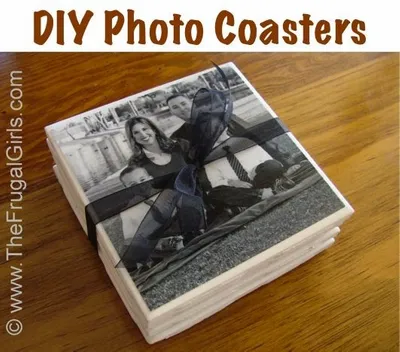
- Family: photo or name coasters, one per household.
Coasters plus a mug feel complete for the price of a bottle of wine. For company gifting at scale, work with us on custom logo coasters printed in one run, with generous bulk discounts and a free proof before you pay.
How Can You Present Christmas Coasters As Thoughtful Gifts?
Pair, wrap, and personalize, in that order. A coaster set under a mug looks planned.
- Pair with a mug, a bag of coffee, or a tin of tea in matching colors.
- Wrap in a kraft box, or tie the stack with twine and a sprig of greenery.
- Personalize with a name, a date, or an inside joke printed on one coaster in the set.
- Add one festive extra: a candy cane or a handwritten tag.
Match the design to the recipient's home, not yours: engraved wood for a minimalist, a printed pattern for a maximalist.
How Do You Choose The Best Christmas Coasters?
Choose Christmas coasters by size, thickness, heat resistance, absorbency, and backing, then design.
- Size: 4" covers most drinks; 3.5" suits wine glasses and a small side table.
- Thickness: 3 to 5 mm for printed sets; 8 to 10 mm for wood, stone, and ceramic.
- Heat resistance: ceramic, stone, cork, and pulpboard; check resin ratings.
- Absorbency: cork, felt, pulpboard, and unglazed stone; not acrylic or glazed ceramic.
- Backing: cork or silicone stops sliding and scratching.
Outdoor sets for porches need a waterproof material such as acrylic or sealed stone, since cork and felt never dry in damp air.
Which Christmas Coaster Features Matter Most?
Material quality and finish matter most, because a warped coaster or a clouded finish ruins the design underneath.
- Finish: matte hides water spots; gloss shows every ring.
- Waterproof or heat-resistant: you rarely get both at the top level, so decide which drink you serve most.
- Cleaning: wipe-clean materials for a busy house.
- Storage: a holder for sets that stay out; a flat box for sets packed away.
Then pick the design that fits your decor. We've seen lovely sets never leave the box because they were the wrong size.
Frequently Asked Questions About Christmas Coaster Designs
What Are Christmas Coaster Designs?
Christmas coaster designs are festive drink mats in themes like snowflakes, trees, Santa, and reindeer, made from cork, wood, ceramic, felt, resin, crochet, or printed pulpboard to protect holiday tables.
How Can You Make Christmas Coasters?
Pick a 4-inch base such as a tile or wood round, prep the surface, add paint, vinyl, or a print, seal with two to three thin coats, cure for 24 hours, and glue on a non-slip backing.