Wooden Coaster Painting Ideas To Create Beautiful Hand-Painted Coasters At Home
A blank wood round looks simple until you sit down to paint one and the questions pile up: which paint sticks? How do you keep it from peeling? And will a wet glass ruin it? We help you work through those questions with this guide that walks you through wooden coaster painting ideas, from paint selection and sealing to designs and gift sets.

Key Takeaways
- Acrylic paint on sanded, sealed wood gives the most reliable results for beginners, while enamel and chalk paint suit specific looks and skill levels.
- Sealing is not optional for coasters that meet cold, sweating glasses. Two thin coats of a water-based topcoat plus a sealed back prevent peeling and moisture damage.
- Personalized and themed sets turn a simple craft into gifts, with monograms, colors, and packaging doing most of the work.
- We supply high-quality custom wood coasters and many other materials you can personalize with names, dates, and artwork at competitive prices, with generous bulk discounts.
Table of contents
-
Wooden Coaster Painting Ideas
-
How To Paint Your Own Coasters?
-
What Kind Of Paint Do You Use On Coasters?
-
How Do You Seal And Waterproof Painted Wooden Coasters?
-
How Can You Create Personalized Wooden Coaster Designs?
-
Which Artistic Wooden Coaster Painting Styles Should You Try?
-
Which Seasonal Wooden Coaster Painting Ideas Work Year-Round?
-
How Can You Make Painted Wooden Coasters Last Longer?
Wooden Coaster Painting Ideas
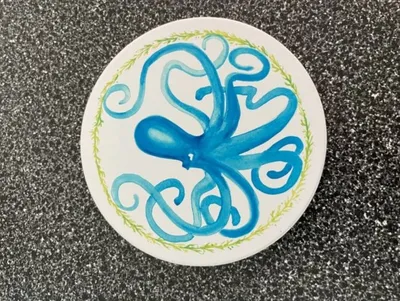
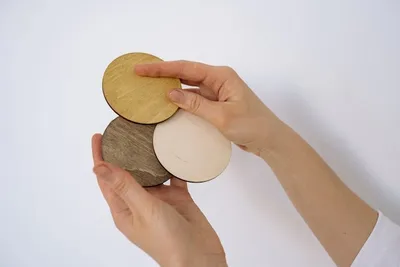
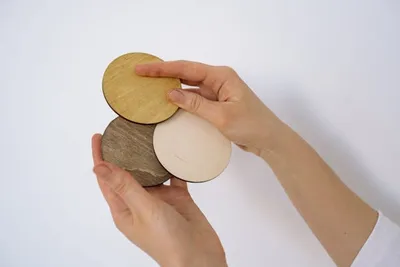
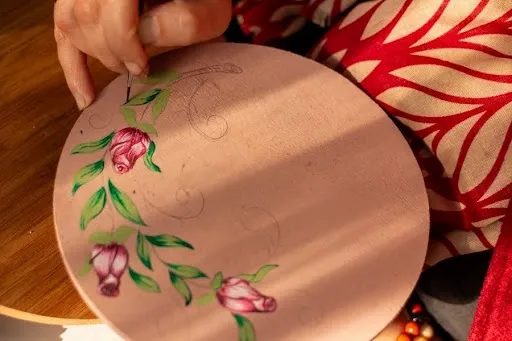
Wooden coaster painting ideas turn a plain blank into a small, useful piece of art, which is why they are among the most popular beginner crafts. A coaster is cheap, forgiving, and finished in an afternoon, so a mistake costs pennies rather than a canvas.
Part of the appeal is that wood coaster painting mixes creativity with real home decor. You end up with something that protects a table and still shows your hand. We've seen first-time painters get hooked after one set because the surface is small enough to finish and personal enough to keep.
In this article we cover painting techniques, paint selection, sealing methods, personalization, and themed inspiration. If you want more general project starters, our DIY coaster ideas guide pairs well with the painting steps here. Start with two or three blanks so you can test before committing to a full set.
How To Paint Your Own Coasters?
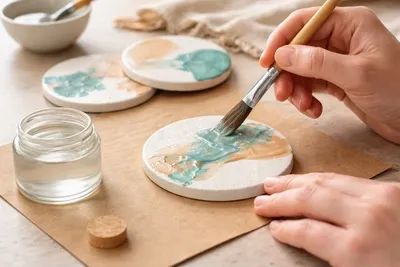
Painting your own coasters follows a clear order: prepare the wood, sketch the design, paint in layers, then dry and seal. Skipping the prep is the most common reason a coaster looks rough or the paint lifts later.
You need a few basic tools. Here is a simple kit:
- Sandpaper in 150 and 220 grit
- A wood sealer or primer for raw blanks
- Acrylic paints and a few brushes
- Painter's tape for clean edges
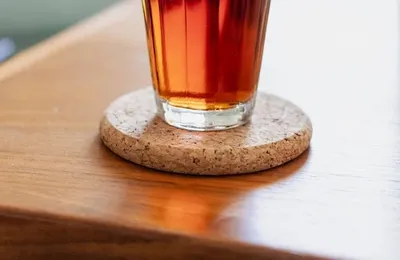
- A water-based topcoat and cork backing
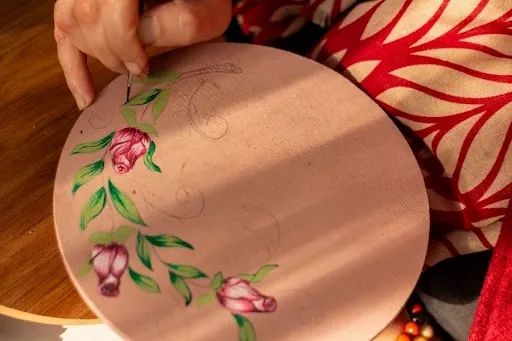
Follow these steps in order:
- Sand the face and edges with 150 grit, then 220, wiping dust between passes so paint grips a smooth surface.
- Seal raw wood with a thin primer coat to stop the grain from drinking up your paint and blotching.
- Sketch your design lightly in pencil, or tape off geometric sections before you commit color.
- Paint in thin layers, letting each coat dry for 20 to 30 minutes rather than loading one heavy coat.
- Cure and seal, waiting until the paint is fully dry before adding topcoat and a cork back.
Work with us to create custom wood coasters with pre-sanded faces so your prep time drops and your paint sits flat from the first coat.
| Intended result | Recommended design | Skill level | Active working time | Best paint method | Recommended finish |
|---|---|---|---|---|---|
| Everyday drink coaster | Geometric/color-block | Beginner | 20–30 minutes each | Acrylic + tape | Water-resistant clear coat |
| Hot-mug coaster | Simple painted border | Beginner | 20 minutes each | Acrylic | Finish explicitly rated for heat |
| Wedding gift | Monogram/date | Intermediate | 30–45 minutes each | Stencil or paint marker | Non-yellowing clear coat |
| Decorative set | Mandala/dot art | Advanced | 60–90 minutes each | Stylus/freehand | Clear gloss or satin coat |
What Painting Techniques Create The Best Results On Wooden Coasters?
Layering, blending, stenciling, and freehand each suit a different look and comfort level. Layering builds depth by stacking thin coats, while blending drags two wet colors together for a soft gradient.
Stenciling is the most beginner-friendly for crisp shapes, since the template does the hard part. Freehand gives the most personal result but rewards a steady hand and light pressure.
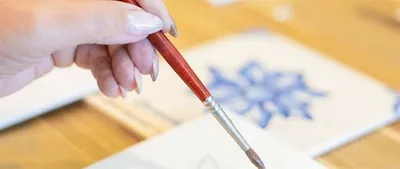
Brush control matters more than brush price. We've found that loading less paint and using short strokes prevents ridges that show through the finish. For a smooth, durable result, let layers dry between coats and sand lightly with 220 grit before the final color so the surface stays even.
Want a smooth blank to paint your own coaster designs?
Work with us to create custom wood coasters with clean, sanded surfaces ready for acrylics, sealer, and your hand-painted artwork at home.
What Kind Of Paint Do You Use On Coasters?
Acrylic paint is the most suitable choice for most wooden coasters because it is water-based, dries fast, and cleans up easily. It bonds well to sealed wood and takes a topcoat without fuss, which is why we recommend it to first-timers.
Other paints have their place. The table below compares the common options:
| Paint type | Best for | Watch out for |
|---|---|---|
| Acrylic | Beginners, layering, most designs | Needs sealing to resist water |
| Chalk paint | Matte, rustic, farmhouse looks | Soft finish, must be sealed |
| Enamel | Glossy, hard, durable surfaces | Slower dry, fumes, harder cleanup |
| Craft markers | Fine detail and lettering | Can bleed on raw wood |
Durability rises with a good topcoat more than with the paint alone. For a repeatable design across a full set, we can reproduce your art with custom coaster printing so every piece matches. Beginners should start with acrylics; experienced crafters can mix enamel accents for gloss.
What Kind Of Paint Will Stay On Wood?
Acrylic, chalk, and enamel all stay on wood well once the surface is prepared, but adhesion depends on prep more than brand. Acrylic paint dries by water evaporation into a flexible film, which conservators note is why acrylic films are more forgiving than brittle coatings and why the Smithsonian describes them as paints that "dry by evaporation" rather than curing hard.
On raw, unfinished wood, paint soaks unevenly and can flake at the edges. Sanding and a thin sealer coat give paint a stable base to grip.
We've learned that skipping the seal is the quiet cause of most peeling. Match the paint to use: acrylic for everyday coasters, enamel for high-gloss display pieces that see less water.
Looking to personalize painted coasters with names and dates?
We help you turn a painted design into custom personalized coasters with names, monograms, and artwork that make gifts and keepsakes feel intentional.
Learn moreHow Do You Seal And Waterproof Painted Wooden Coasters?
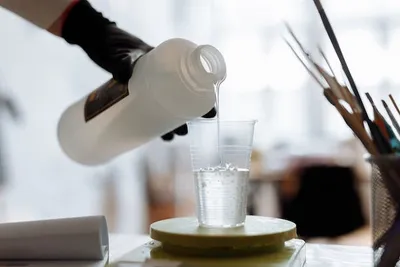
Sealing means adding a clear protective topcoat over cured paint so water, heat, and wear cannot reach it. Your main options are polyurethane, polycrylic, resin, Mod Podge, and spray sealers, and they trade off ease against toughness.
- Water-based polyurethane or polycrylic: clear, durable, low odor, easy to recoat.
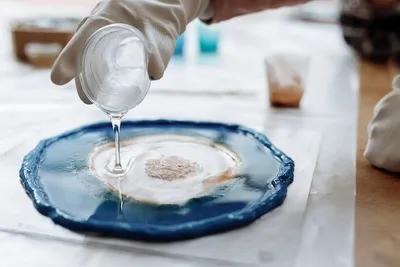
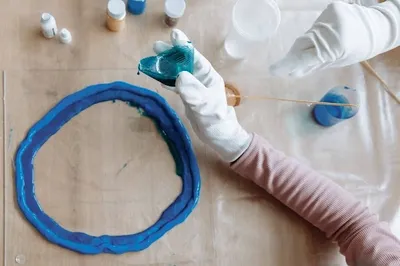
- Epoxy resin: thick, glassy, fully waterproof, but less forgiving to mix and pour.
- Mod Podge: easy and cheap, but on its own it is not fully waterproof.
- Spray sealer: fast and even, though it needs several light coats.
Curing is where people rush. Apply two thin coats a couple of hours apart, then let the coaster cure a full day before use. Note that fresh paints and finishes "release organic compounds" as they dry, so the EPA advises working with plenty of fresh air.
For a deeper comparison, our best finish for coasters guide breaks down each topcoat. Sealing the edges and back is what stops peeling and moisture damage over time.
How Do Wooden Coasters Not Rot?
Wooden coasters resist rot when you keep their moisture content low and seal every side. Wood scientists at the USDA Forest Products Laboratory report that wood "will not decay below" 20 percent moisture content, and that decay needs sustained wetness above roughly 30 percent to take hold.
That is good news for a sealed coaster, which spends most of its life dry. The risk is a raw edge or unsealed back that wicks water and stays damp.
Seal all six surfaces, including the underside, then add cork so trapped moisture cannot sit against wood. Store coasters flat in a dry spot, and wipe them dry after use. Our tile coaster waterproofing guide covers the same sealing logic for hard surfaces.
How Can You Create Personalized Wooden Coaster Designs?
You personalize wooden coasters by adding names, quotes, monograms, dates, or transferred photos to a painted base. The base coat sets the color story, and the personal detail is what makes someone keep it.
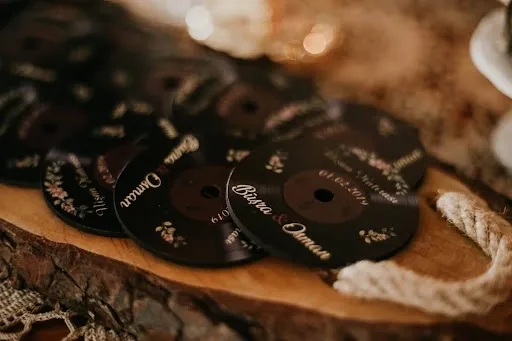
Names and single initials are the easiest entry point, painted freehand or stenciled over a solid background. Monograms and dates suit weddings and anniversaries, while short quotes fit larger 4 to 4.5 inch rounds.
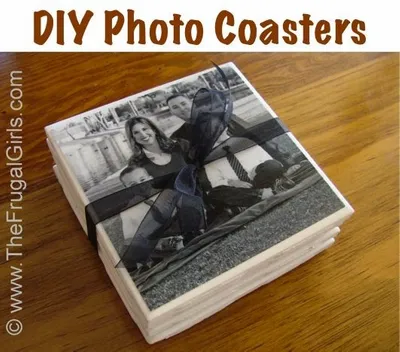
Work with us to turn a design into custom photo coasters when you want a printed image that a brush cannot match, then paint a border to tie the set together. For image transfer at home, a gel medium or waterslide method moves a printout onto sealed wood; test one first, since transfers can smudge before they set. Coordinate colors across a set so the pieces read as one gift.
Which Personalized Wooden Coaster Ideas Make The Best Gifts?
Wedding, housewarming, holiday, and family-themed coasters make the strongest gifts because they attach to a specific person or moment. A wedding set in the couple's colors with their date beats a generic four-pack every time.
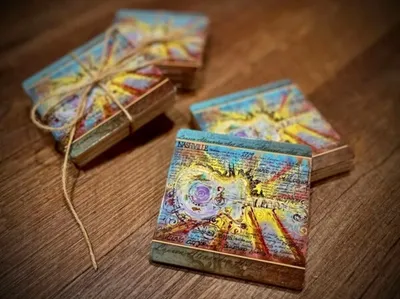
Match the palette to the occasion: warm neutrals for housewarmings, deep reds and greens for holidays, soft pastels for a new baby. Packaging finishes the gift - a kraft box, twine, and a small card make handmade coasters feel deliberate. We've noticed coordinated sets of four to six give the best impression, since a matched collection looks planned rather than one-off.
Need painted-look coaster sets in large quantities?
Order custom coasters in bulk for weddings, markets, and bars, with generous wholesale discounts on coordinated painted-style designs.
Which Artistic Wooden Coaster Painting Styles Should You Try?
Mandala, dot art, folk art, abstract, geometric, checkered, and color-block are the styles worth trying, roughly in order of difficulty. Geometric, checkered, and color-block designs use tape and flat color, so they are the most forgiving for beginners.
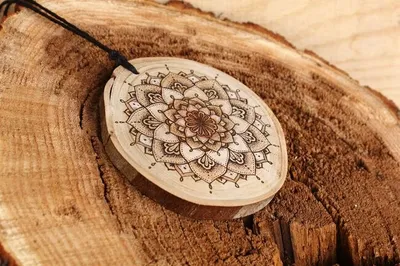
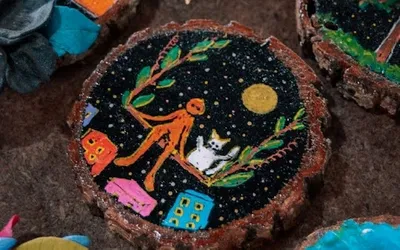
Mandala and dot art carry real cultural weight. The mandala is, per Britannica, "a symbolic diagram used" in Hindu and Buddhist practice, built from a center outward, and the Sanskrit word simply means circle. Dot art uses a stylus to build patterns one bead of paint at a time.
Abstract and folk art give you room to loosen up with color and motif. Slate and dark stone make painted dots pop, so our custom slate coasters suit high-contrast styles. Pick a style by skill: tape-based patterns first, freehand mandalas once your brush control is steady.
How Can You Combine Painting And Wood Burning For Unique Coasters?
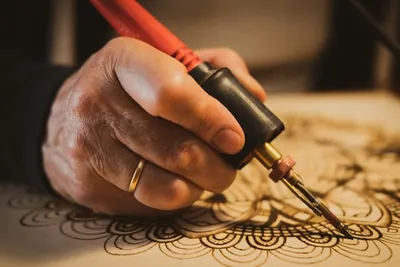
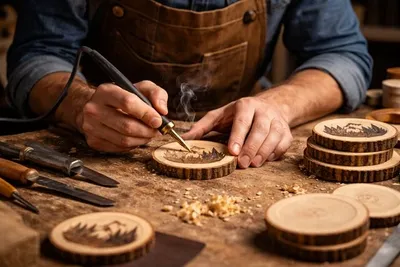
Combine painting and wood burning by burning your outline first, then filling it with paint. Pyrography is the craft of drawing on wood with a heated metal tip, which scorches a permanent line that paint cannot blur.
A simple workflow works best: burn the design, then add color inside the lines like a coloring book. Safety comes first with any burning.
Always work in a ventilated space and wear a mask, because the National Cancer Institute classifies wood dust as a "known human carcinogen" when inhaled over time. Let the burned surface cool, paint your fills, then seal the whole coaster with a water-based topcoat so the contrast lasts.
Print your painted design onto any coaster material
Skip the drying time and let us reproduce your artwork with custom coaster printing on wood, cork, or stone for a repeatable finish.
Get startedWhich Seasonal Wooden Coaster Painting Ideas Work Year-Round?
Seasonal painting keeps a set feeling current by rotating designs and colors with the calendar. The trick is to build small themed collections you can swap out, rather than one permanent set.
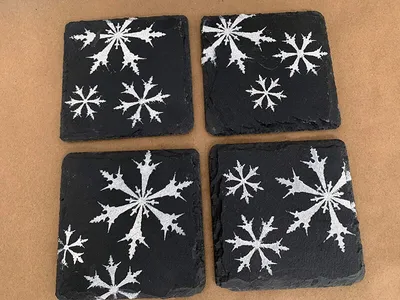
Holiday sets are the obvious anchor: snowflakes and evergreens for winter, hearts for February, pastels for spring. Interchangeable collections of four keep storage simple and let you refresh a coffee table without redecorating.
Work with us to produce custom coasters in bulk when you want matching seasonal sets for a shop, market table, or a large family, with wholesale pricing on repeat designs. Seasonal sets also open gift-giving windows across the year, from housewarmings to holiday exchanges.
Which Summer And Fall Painted Wooden Coasters Are Trending?
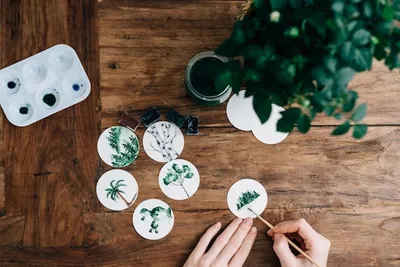
Right now, the summer and fall designs customers ask about most are tropical motifs and warm autumn palettes. Summer sets lean into palm leaves, citrus slices, and bright coastal blues that suit patios and pool bars.
Florida coastal themes - shells, waves, and sunset gradients - are a steady favorite for beach houses and rentals. For fall, painters move to burnt orange, mustard, and deep brown, often with simple leaf or plaid patterns. We've seen these two palettes carry the most warm-weather and harvest entertaining, so build a small set for each and rotate them as the season turns.
How Can You Make Painted Wooden Coasters Last Longer?
Painted wooden coasters last longer when you seal them well, clean them gently, and store them dry. The finish does the protecting, so the paint underneath only lasts as long as the topcoat above it.
Not sure which painted coaster project fits you? Use this quick guide:
For daily care, wipe with a soft damp cloth and skip soaking or the dishwasher, which lifts finishes and swells wood. Use them on their painted face and let sweating glasses meet the sealer, not bare paint.
Store them flat and dry, stacked with a felt pad or spacer so faces do not rub. A quick re-coat of topcoat once a year refreshes a heavily used set.
What Common Wooden Coaster Painting Mistakes Should You Avoid?
The biggest mistakes are painting on raw wood, sealing too thin, and rushing the cure. Each one shows up later as peeling, water rings, or a tacky surface. This quick table maps the fix:
| Mistake | Result | Fix |
|---|---|---|
| No sealing or primer | Blotchy, peeling paint | Sand and seal before painting |
| Topcoat too thin | Water rings and wear | Two thin coats, cure fully |
| Rushing the cure | Tacky, soft finish | Wait 24 hours before use |
We've found that scratches and water damage almost always trace back to a skipped step, not bad paint. Prep, seal all sides, and cure patiently for durable handmade coasters that hold up.
Frequently Asked Questions About Wooden Coaster Painting Ideas
What Are The Best Wooden Coaster Painting Ideas?
The best ideas match your skill level: geometric, checkered, and color-block designs for beginners, and mandala, dot art, or personalized monograms once your brush control improves. Themed and seasonal sets make the strongest gifts.
How To Paint A Wooden Coaster?
Sand and seal the raw blank, sketch or tape your design, then paint in thin acrylic layers, drying between coats. Finish with two thin coats of a water-based topcoat and a cork back, curing a full day before use.