Standard Coaster Size: What Dimensions Are Right For Your Drinkware?
Most everyday glasses sit well on a 4-inch coaster, yet a wide mug or a beer stein can still hang over the edge. The right size depends on the base of the glass, the room you want for condensation, and whether the coaster has a rim or a border. In this guide, we explain the standard coaster size and how to match it to your drinkware.

Key Takeaways
- A standard coaster measures 3.5 to 4 inches (8.9 to 10.2 cm) across, round or square, and no single dimension fits every glass.
- Size a coaster from the base of the glass, not its capacity: take the widest base measurement and add about 1 inch of margin.
- Thickness is a separate choice: paper board runs about 1 to 2 mm, and pulpboard, cork, wood or silicone typically 3 to 5 mm.
- We supply high-quality custom coasters in round, square and custom shapes from 3 to 5 inches, with a free proof and generous bulk discounts.
Table of contents
-
What Is The Standard Coaster Size?
-
What Are The Common Coaster Sizes By Shape?
-
What Size Should A Coaster Be For Your Drinkware?
-
How Thick Should A Drink Coaster Be?
-
What Practical Factors Affect Coaster Size Selection?
-
How Do You Choose The Right Coaster Size For Your Business And Branding?
-
When Should You Choose Custom Coaster Sizes?
-
What Should You Consider When Choosing Car And Pub Coasters?
What Is The Standard Coaster Size?
A standard coaster size is about 3.5 to 4 inches (8.9 to 10.2 cm) across, round or square, because that covers the 2.5 to 3 inch base of most glasses and mugs with margin for condensation. The typical coaster size runs 3.5 to 4.5 inches once you count larger sets for mugs.
No single universal dimension exists. The normal coaster size at home and the average coaster size on a bar top vary by shape, drinkware and use.
We cut 3, 3.5, 4 and 4.5 inch coasters every day, and 4 inches is the size that gets reordered, because it covers a rocks glass with room to spare.
How Are Coaster Dimensions Measured?
Coaster dimensions are measured edge to edge through the center for round coasters (the diameter) and as length and width for square and rectangular ones.
Makers list thickness separately, in millimeters or fractions of an inch. Usable surface is the flat area a glass can sit on, and it shrinks under a raised rim, a border or a recessed center.
Conversions are exact: the NIST guide to the SI lists the inch to centimeter factor as 2.54, so 4 inches is 10.16 cm and 3.5 inches is 8.89 cm.
What Are The Common Coaster Sizes By Shape?
The common coaster sizes by shape are 3.5 and 4 inch rounds, 4 x 4 inch squares, 3 to 3.5 inch small sets, and 4.5 to 5 inch large sets for mugs.
| Shape or size class | Inches | Centimeters | Typical drinkware and setting | Fit note |
|---|---|---|---|---|
| Round, standard | 3.5 | 8.89 | Pint glasses, highballs, home sets | Enough for bases up to about 2.5 in |
| Round, standard | 4 | 10.16 | Rocks glasses, mugs, bar service | Covers a 3 in base with margin |
| Square, standard | 4 x 4 | 10.16 x 10.16 | Restaurants, branded sets, menus and QR codes | Judge fit by the side, not the diagonal |
| Small | 3 to 3.5 | 7.62 to 8.89 | Espresso cups, stemmed glasses, small tables | Tight for a rocks glass |
| Large | 4.5 to 5 | 11.43 to 12.70 | Oversized mugs, steins, pitchers | Takes more table and storage space |
| Custom shape | 3 to 5 at the widest point | 7.62 to 12.70 | Logos, mascots, promotions | Measure the narrowest usable span, not the longest |
Manufacturers differ, so treat these as size classes, not guarantees, and confirm the finished dimension on the supplier's spec. For a shape-by-shape walk-through, see our coaster size guide, which this article builds on.
How Big Are Round And Square Coasters?
Round coasters are most often 3.5 or 4 inches in diameter, and the common square is 4 x 4 inches. Neither shape is "preferred" on its own. Fit and storage decide.
Don't judge a square by its diagonal. A 4 inch square measures 5.66 inches corner to corner, but a round glass sits on the 4 inch span.
Rims and recesses shrink the surface. A 4 inch coaster with a 1/4 inch raised rim leaves a 3.5 inch usable surface, and a recessed stone coaster loses more. We print custom round coasters and custom square coasters in the same four sizes, so the shape choice is about look and print space.
Need round coasters sized to your glasses?
Work with us to print custom round coasters in 3, 3.5, 4 or 4.5 inches, with a free proof before you pay and generous bulk discounts.
What Size Should A Coaster Be For Your Drinkware?
A coaster should be the drinkware's widest base diameter plus about 1 inch, which gives roughly 1/2 inch of margin on each side for condensation and an off-center landing. That is our fit rule, not an industry standard.
Size from the actual base, never from the capacity or the name on the box, because two "pint glasses" can differ by 1/4 inch at the base. Libbey's specification for its 12 oz Everest rocks glass lists a 3 inch bottom diameter. The table shows its other common models, each a single model, not a category.
| Drinkware (one common model) | Base diameter | Coaster size by the fit rule | Note |
|---|---|---|---|
| 14 oz pint or mixing glass (Libbey 15141) | 2 3/8 in | 3.5 in | Enough margin at 3.5; 4 in is roomier |
| 12 oz rocks glass (Libbey 15435) | 3 in | 4 in | 3.5 in leaves almost no marginƒ |
| 12 oz handled mug (Libbey 5273) | 2 3/4 in | 4 in | Provides approximately ½ inch of margin on each side. |
| 10 oz heavy-base beer glass (Libbey 5362) | 3 in | 4 in | Same base as a rocks glass, same coaster |
| 9 oz stemless wine glass (Libbey 207) | 1 5/8 in | 3.5 in | Small footprint, wide bowl; size to the drip, not the base |
| Stemmed wine glass (typical foot) | About 2.5 to 3.25 in | 4 in | Foot is wider than the stem suggests |
| Beer stein or oversized mug (typical) | Over 3.25 in | 4.5 in | Check the base; many exceed 3.5 in |
The stemless wine glass is the surprise entry: a tiny base and a big sweat ring. Before you order multiples, cut a paper template and set your real glasses on it.
How Do You Measure Drinkware For The Right Coaster Size?
Measure the part of the glass that touches the table, then compare it with the coaster's usable surface:
- Set the empty glass on a flat surface and find the ring of contact, not the rim or the bowl.
- Measure the widest part of the base across the center with a ruler; for a stemmed glass, measure the foot.
- Repeat for each type you serve and keep the largest figure, since brands differ.
- Add about 1 inch and round up to the next size a maker offers. A 2 3/4 inch mug base becomes 3.75, so order 4 inches.
- Compare the base with the usable surface, after subtracting any rim, border or recess.
Work with us to print custom pulpboard coasters in 3, 3.5, 4 or 4.5 inches, with a free proof so you confirm the size before we cut anything.
Choose square coasters for bars, restaurants and events
Our custom square coasters give logos, menus and QR codes more printable space, in various materials and thicknesses at competitive prices.
Learn moreHow Thick Should A Drink Coaster Be?
Make a drink coaster as thick as its material and job require: about 1 to 2 mm for a disposable paper coaster, 3 to 5 mm for pulpboard or a reusable cork, wood or silicone set, and more for stone and ceramic.
Thickness buys different things:
- Cushioning comes from a soft material, not depth.
- Absorbency depends on the board; a thick glazed tile absorbs nothing.
- Heat protection depends on thermal conductivity, thickness, and backing. Cork provides effective insulation, while stone and ceramic coasters may require insulating backing to protect heat-sensitive surfaces.
- Stability depends on the coaster's weight, grip, flatness, and base dimensions. A nonslip backing can help prevent movement.
For DIY wood coasters, cut a slab that lies flat, add a backing, and finish the edges; our woodworking coasters guide covers woods and finishes. Specs vary by product, so read the listed thickness.
How Does Coaster Material Affect Thickness?
Material sets the thickness band. Board makers list caliper in points (pt), thousandths of an inch: 40 pt is 0.040 inch, about 1 mm. Paperboard coasters are available in different thicknesses. Standard options may measure approximately 1–2 mm, while thicker high-density pulpboard products can measure 3–5 mm. Check the specifications for your selected product.
| Material | Typical thickness | What the thickness buys | Stack height per 50 |
|---|---|---|---|
| Paper and beermat board | About 1 to 2 mm (40 to 80 pt) | Absorbency, low cost, disposable | About 5 to 10 cm |
| High-density pulpboard (ours) | 3, 4 or 5 mm | Absorbency plus rigidity; prints front or both sides | About 15 to 25 cm |
| Cork | Typically 3 to 5 mm, product-dependent | Cushioning, light heat resistance; needs drying | About 15 to 25 cm |
| Wood | Typically 3 to 5 mm, product-dependent | Stability; performance depends on the finish | About 15 to 25 cm |
| Silicone | Typically 3 to 5 mm, product-dependent | Flexible, contains or sheds moisture rather than absorbing it | About 15 to 25 cm |
| Stone, ceramic, slate, marble | Thicker; check the product page | Weight and stability; needs cork or felt backing | Tall and heavy; check the spec |
Thicker is not always the answer: a thin absorbent paper coaster handles a sweating glass at a short event well. If the material question comes first, our guide to what coasters are made of sorts the options by job.
What Practical Factors Affect Coaster Size Selection?
Six practical factors decide the size once the glass fits: table space, storage, cleaning, stacking, quantity and setting.
- Table space: a 5 inch coaster on a bistro table crowds the plate; 3.5 to 4 inches leaves room.
- Storage: larger and thicker sets need deeper drawers or taller shelves.
- Cleaning: reusable sets get wiped or washed; disposables get replaced.
- Stacking and quantity: a home needs 4 to 12; a bar or event needs 50 and up, where stack height matters.
A reusable 4-inch coaster accommodates many everyday mugs and rocks glasses with bases up to approximately 3 inches. Larger mugs may need 4.5- or 5-inch coasters. For an event or a bar, disposable printed coasters at 3.5 to 4 inches win on cost and cleanup.
On a wood dining table, a cork-backed coaster helps reduce the risk of scratches, though nothing is scratch-proof. A folded napkin absorbs but gives no rigid base, so test one sample before a larger quantity.
How Do Table Space And Storage Affect Coaster Size?
Larger coasters take more table space and more storage, and the effect compounds at quantity. Stack height is thickness times count. Fifty pulpboard coasters at 4 mm stack about 20 cm (8 inches) high, 50 beermats at 1.4 mm about 7 cm, and 50 stone coasters at 8 mm about 40 cm, and heavy.
One stack of 1,000 beermats stands about 1.4 m tall, so a bar needs that shelf or several shorter stacks, which is why hospitality buyers favor compact storage. Fit the glass first, then let the shelf decide the thickness.
Looking for car coasters that actually fit the cup holder?
Create custom car coasters sized for cup holders, personalized with names, logos or artwork, for giveaways and promotions on a budget.
How Do You Choose The Right Coaster Size For Your Business And Branding?
For a business, choose the coaster size by the drinks you actually serve, the table layout, and the artwork you need to fit, in that order. Rocks glasses at a cocktail bar need 4 inches; small cups at a cafe fit on 3.5.
One logo fits a 3.5 inch coaster, but a logo, a short message and a QR code need a 4 inch or 4 x 4 inch coaster, or the code crowds the logo.
Then weigh unit price, storage, replacement frequency and supplier availability. A household set is 4 to 12 pieces. A bar, a wedding or a corporate gift is a 50-piece job, which is our minimum order. Work with us to print custom QR code coasters that open a menu or a review page and scan on the first try.
How Do Branding And Printable Area Affect Coaster Size?
The printable area is the finished size minus the safe margin on each side, and bleed extends beyond the trim. Indiana University Printing Services describes bleed as an extra 1/8 inch beyond the trim. It also asks that anything you don't want cut sit at least 1/8 inch inside the trim line.
On a 4 inch round coaster, that gives an artwork canvas of 4.25 inches and a safe design area of 3.75 inches. A 3.5 inch coaster drops to 3.25 inches.
DENSO WAVE's guide states a QR code requires a four-module wide margin on all sides, the quiet zone. We print codes no smaller than about 1 inch and test-scan the proof.
We've seen more artwork fail at proof for a logo set at the trim line than for any other reason, so confirm the supplier's printable area before you finalize the file.
Need branded beer mats in bulk for your pub?
Order custom beer mats sized for pint and rocks glasses, printed front or both sides, with fast turnaround times and wholesale pricing.
Get startedWhen Should You Choose Custom Coaster Sizes?
Choose a custom coaster size when standard options cannot fit the drinkware or the design: unusually wide bases such as steins and pitchers, a distinctive shape that carries the brand, or artwork that needs more safe area than 4 inches offers.
Custom Coasters Now (customcoastersnow.com) prints custom coasters to order in pulpboard, cork, ceramic, stone, wood and more, with a minimum order of 50 and a free proof before you pay through the "See Design - Pay later" option. Confirm supported dimensions and materials first. Minimum quantities, tooling, tolerances and lead times are supplier-dependent, and cutting shifts a fraction of a millimeter.
Always approve a dimensioned proof or a physical sample before production, because we can't make changes once production starts. Work with us to create custom shaped coasters from 3 to 5 inches at the widest point, personalized with names, dates, logos or QR codes.
How Do You Specify Custom Round Or Square Coaster Dimensions?
Specify a custom coaster with five numbers and a file: finished diameter (round) or width and length (square), thickness, corner radius or a shape outline, print area and sides, and quantity. Send the artwork sized to the full canvas with bleed and keep text inside the safe area. Then check the glass against any border, rim or recess on the finished piece.
We've found that the specs most often missing from a first request are thickness and corner treatment, and both change how the coaster sits under a glass. Measure the proof before you approve.
What Should You Consider When Choosing Car And Pub Coasters?
Car coasters and pub coasters are sized to different targets: a specific cup holder for the car coaster, the base of the glass on an open table for the pub coaster. A 3.5 or 4 inch "standard" should not be assumed to fit either.
Design News reported factory cup holders of 2.5 to 3.5 inches in diameter, some tapered and some adjustable. Car coasters run about 2.5 to 3 inches. We've found a 3 inch car coaster fits most holders, and a 3.5 inch one fits the brochure photo.
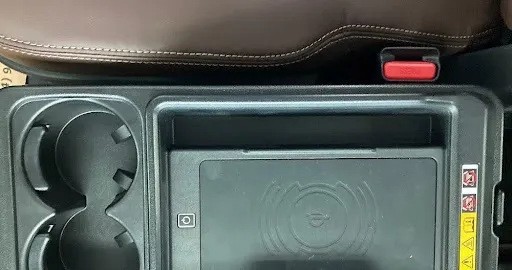
For a pub, size to the glass bases you pour most and to branding visibility. Measure your holder or your glass against the supplier spec, then order custom car coasters cut to the holder.
How Do Car And Pub Coasters Differ From Standard Coasters?
Car coasters differ from standard coasters in where they sit: a confined, often tapered cup holder rather than an open table. Many have a removal notch or tab, and the absorbent face catches condensation.
Pub coasters, also called beermats, differ in board and replacement cycle. A common US bar coaster is a 4 inch round on 40 pt board, about 1 mm thick, as listed on Katz Americas' 4 inch 40 pt coaster spec. European beermats are commonly cited at 107 mm round and 93 mm square on 1.2 to 1.5 mm board. Treat that as a convention, not a standard.
Order custom beer mats in 3.5 or 4 inches, printed on one or both sides, and check the measurements against the spec before the full run.
Frequently Asked Questions About Standard Coaster Size
What Is Considered A Standard Coaster Size?
A standard coaster size is about 3.5 to 4 inches (8.9 to 10.2 cm) across, round or square. It covers the 2.5 to 3 inch base of most glasses with margin for condensation, though no single size fits every glass.
What Are The Typical Coaster Sizes For Different Shapes?
Round coasters typically measure 3.5 or 4 inches across, and the common square is 4 x 4 inches. Small sets run 3 to 3.5 inches, large sets 4.5 to 5 inches, and custom shapes 3 to 5 inches at the widest point.